
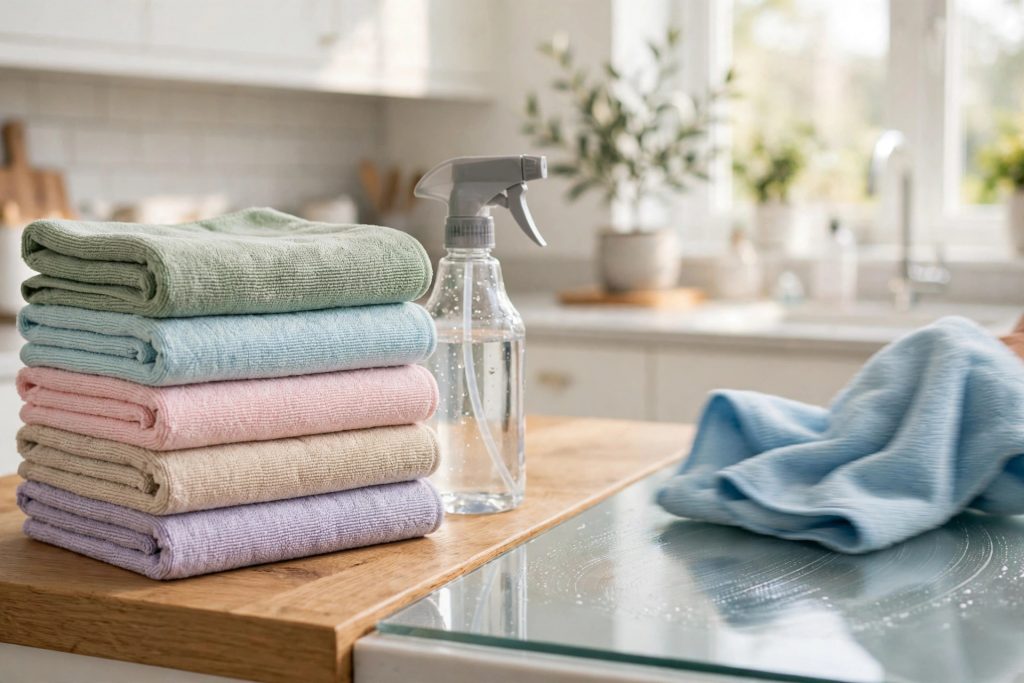
A microfiber towel for quick cleaning lifts dust, spills, and smears without streaks, so daily cleaning takes less time and surfaces look clear with little effort. Many homes fight the same small messes each day, from fingerprints on glass to crumbs on a bench, and a towel that grabs dirt instead of pushing it around makes the job far easier. Microfiber works because its fine fibres trap dust and soak up liquid, so a single wipe can leave a surface clean where an old cloth would need several passes. The towel also suits many rooms, from the kitchen bench to the bathroom mirror, and it washes well, so one towel can serve a home for a long time. This guide explains why quick cleaning matters, how a microfiber towel works, what to look for when you buy one, how to use it well, and how to wash and store it so it stays soft and ready. The towel also dries fast on a line, so it is ready again soon after washing, and a home can keep a small set in rotation.
Why Quick Cleaning Matters
Quick cleaning matters because a home that is easy to keep clean is a home that stays pleasant to live in, and small messes grow fast when they are left alone. A spill that is wiped at once takes a moment, while a spill that dries becomes a stain that needs scrubbing, so a towel that is always at hand saves time each day. Quick cleaning also suits busy days, since a cook who can wipe the bench between tasks keeps the kitchen safe and tidy without stopping to fetch a mop or a spray. A towel that cleans without streaks matters for glass and mirrors, where a smeared surface looks worse than a dusty one, and a single wipe that leaves glass clear is a small win that buyers notice. Homes with children or pets face more messes, so a towel that grabs dirt fast earns its place by the sink. When cleaning feels quick and easy, it gets done more often, and a simple towel helps a home stay fresh with little effort. A towel that is always at hand by the sink means messes are wiped at once, before they dry and turn into stains. A home that cleans little and often stays fresh with far less work than a home that leaves every small mess until the weekend.
How a Microfiber Towel for Quick Cleaning Works
A microfiber towel works because its fibres are far finer than the fibres in a normal cloth, and the fine split fibres trap dust and soak up liquid instead of pushing them across the surface. Each fibre has tiny edges that catch dirt, so a wipe lifts grime into the towel rather than smearing it around, and the towel can hold several times its own weight in water. The weave also matters, since a looped weave suits dusting and a flat weave suits glass, and a towel with a dense weave cleans more with each pass. A dry towel is best for dusting and polishing, since the fibres catch dust on contact, while a damp towel is best for spills and sticky marks, since the water loosens the dirt and the fibres carry it away. The towel needs no soap for most jobs, which suits homes that want to clean without chemicals, and a rinse under the tap clears most of the dirt so the towel is ready again. A towel with a dense weave holds more water than a thin towel, so a large spill needs fewer passes to clear.
Choosing the Right Microfiber Towel for Your Kitchen
Choosing a microfiber towel starts with the job you do most, since a thick towel suits spills and a thin flat towel suits glass and mirrors. Check that the towel feels soft and dense, since a towel with more fibres cleans better and lasts longer than a thin towel that feels rough. Look at the edges too, since a neatly bound edge keeps the towel from fraying in the wash, and a towel that frays soon loses its shape. Size matters as well, since a large towel covers a bench in a few wipes, while a small towel suits a mirror or a tap. Colour can help a home stay organised, since one colour for the kitchen and another for the bathroom keeps towels apart. A towel with a hanging loop stores neatly on a hook, so it is always within reach when a spill happens. For cooks looking for everyday kitchen tools, Skyrocs offers a helpful starting point, and the pet supplies range covers daily items for homes that share their kitchen with a cat or a dog.
Using Your Microfiber Towel for Quick Cleaning
Using a microfiber towel well starts with matching the towel to the job, since a dry towel dusts best and a damp towel cleans spills best. Fold the towel into quarters, so you have several clean faces to work with, and turn to a fresh face when one side is dirty. Wipe in one direction rather than in circles, since a straight wipe lifts dirt into the towel and leaves fewer streaks on glass. For a spill, lay the towel over the liquid and let it soak for a moment before you wipe, since the fibres draw the liquid up better when they have time to absorb it. For glass and mirrors, use a flat weave towel that is only slightly damp, and finish with a dry pass, since the dry pass takes away the last haze. Keep one towel by the sink and one in the bathroom, so the right towel is always close at hand, and rinse the towel under the tap between jobs so it stays fresh through the day. A fresh face of the towel cleans better than a dirty one, so fold the towel often and turn to a clean side.
Cleaning and Storing Your Microfiber Towel for Quick Cleaning
A microfiber towel earns its place when it is easy to wash, since a towel that stays dirty will smear rather than clean. Rinse the towel under warm water after each use, and wash it in the machine with mild soap when it looks grey or feels stiff. Avoid fabric softener, since softener coats the fine fibres and stops them from trapping dust, and avoid hot tumble drying, since high heat can melt the fibre tips and dull the towel. Dry the towel on a line or on a low heat setting, and fold it neatly so it is ready for the next job. Keep kitchen towels apart from bathroom towels, and store them in a drawer or on a hook where they are easy to reach, rather than buried under heavier cloths that could crush the fibres. A towel that is washed with other towels and cloths keeps its shape, since it tumbles freely in the machine. A towel that is washed well stays soft and keeps cleaning for a long time.
Frequently Asked Questions
Is a microfiber towel for quick cleaning needed for daily cleaning?
It is not needed, yet it makes daily cleaning far faster, since its fine fibres trap dust and soak up spills in one wipe, so homes that clean often will find it worth keeping by the sink. A towel that cleans without chemicals also suits homes with small children, since no spray is needed for most jobs.
How does a microfiber towel for quick cleaning work?
Its fine split fibres catch dust and soak up liquid instead of pushing them around, so a single wipe lifts dirt into the towel and leaves the surface clear without streaks. The fibres also hold water well, so a damp towel can wipe a whole bench without needing to be wrung out often.
Can a microfiber towel for quick cleaning handle glass and mirrors?
Yes, a flat weave towel that is only slightly damp cleans glass well, and a dry pass at the end takes away the last haze, so mirrors and windows come out clear.
How do I wash a microfiber towel for quick cleaning after use?
Rinse it under warm water after use, wash it in the machine with mild soap when it looks grey, avoid fabric softener and hot drying, and dry it on a line or on low heat.
What should I look for when buying a microfiber towel for quick cleaning?
Look for a soft dense towel with neatly bound edges, a weave that suits your job, a size that covers your surfaces, and colours that help you keep kitchen and bathroom towels apart. A towel that feels dense and soft in the hand will clean better than a thin towel, so trust the feel as well as the label.