
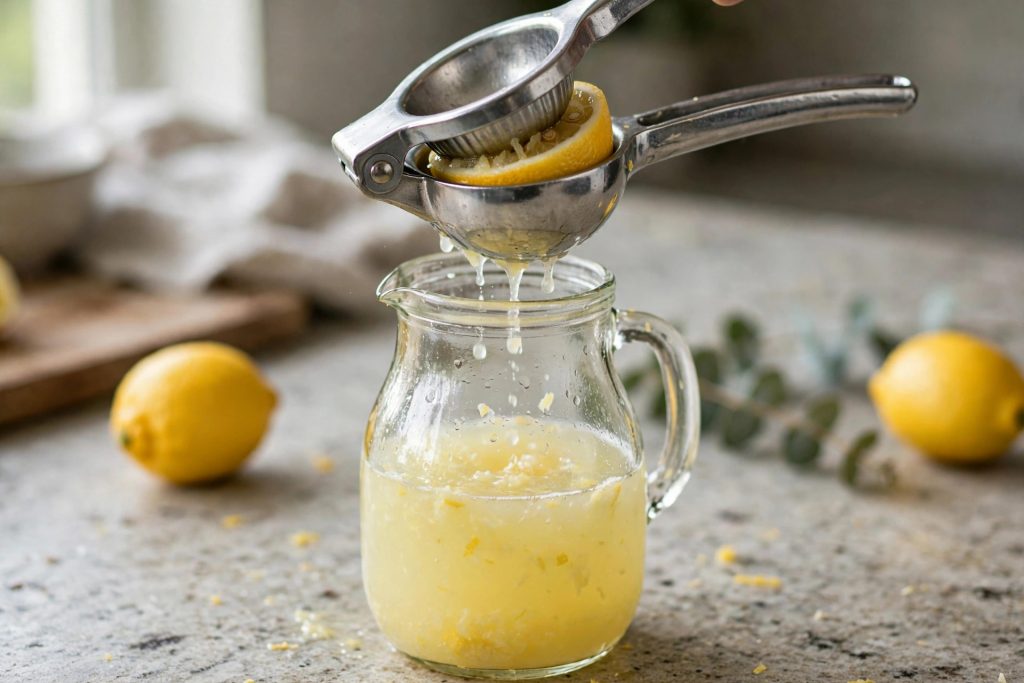
A lemon squeezer for fresh juice turns a whole lemon into a bright glass of juice in a short time, since squeezing a lemon by hand leaves much of the juice in the fruit and sends seeds and pulp into the bowl. Whether you are dressing a salad, mixing a drink, baking a cake, or starting the day with warm lemon water, fresh juice tastes cleaner and sharper than juice from a bottle. A good squeezer presses the fruit evenly, catching the pips while letting the juice flow freely into a jug or a glass. This guide explains why fresh juice matters, how a squeezer works, what to look for when you buy one, how to use it well, and how to keep it clean so it is ready every time you cook.
Why Fresh Juice Matters
Fresh juice matters because a lemon picked and squeezed at home tastes bright and lively in a way that bottled juice rarely matches. The juice from a fresh lemon carries a clean sharp flavour that lifts a salad dressing, wakes up a fish dish, and adds depth to a cake, while bottled juice often tastes flat and dull by comparison. For cooks who use lemons often, the difference shows up in every dish, since a reliable squeezer means less waste and more juice from each lemon you buy. A good squeezer earns its drawer space by turning a fiddly job into a quick one, and that is why so many home cooks reach for it before any other tool when a recipe calls for lemon juice.
How a Lemon Squeezer for Fresh Juice Works
A lemon squeezer for fresh juice works by pressing the cut fruit against a ridged cone or between two cups, so the pressure forces the juice out of the flesh while the skin stays behind. Most hand squeezers use a bowl shaped cup with holes, and you place half a lemon cut side down in the cup, then press the handles together so the fruit is crushed and the juice runs out through the holes. Some squeezers use a cone set on a base, and you press and twist the lemon half on the cone, letting the ridges tear the flesh and release the juice into a jug below. The holes or slots in the cup catch the pips and much of the pulp, so the juice that flows out is smooth and ready to use. The best squeezers press the fruit evenly, since a press that only squeezes one side leaves juice in the other half of the lemon. A good squeezer needs no power and no setup, and its simplicity is the point, since a solid frame and a shaped cup are all it takes to press a lemon in seconds. The tool works best when the lemon is at room temperature and rolled gently on the bench before cutting, since a warm soft lemon gives up its juice far more freely than a cold hard one.
Choosing the Right Lemon Squeezer for Fresh Juice for Your Kitchen
Choosing a lemon squeezer for fresh juice starts with the size, since a squeezer must fit the lemons you buy and hold them firmly without slipping. A cup that is too small crushes the fruit unevenly, while a cup that is too large lets the lemon slide around and wastes juice. The handles should feel comfortable in your hand, since a squeezer that strains your wrist slows you down, while a long lever handle gives you more force with less effort. Look for holes that are small enough to catch pips but large enough to let juice flow freely, since holes that are too fine clog with pulp and holes that are too wide let seeds through. If you squeeze lemons often, a sturdy press with a solid hinge suits you, while a light cone squeezer suits cooks who want a tool that stores easily in a crowded drawer. For cooks looking for everyday kitchen tools, Skyrocs offers a helpful starting point, and the pet supplies range covers daily items for homes that share their kitchen with a cat or a dog. Think about how you will use it too, since a squeezer for a single lemon in a dressing needs a different size from a press that juices a whole bag of lemons for a party.
Using Your Lemon Squeezer for Fresh Juice
Using a lemon squeezer for fresh juice well is mostly about preparing the lemon and pressing with a steady rhythm, since rushing the job is what leaves juice in the fruit and seeds in the glass. Start with lemons at room temperature, and roll each one gently on the bench under your palm, since rolling loosens the flesh inside and helps the juice flow freely. Cut the lemon in half across the middle, so each half sits neatly in the cup with the cut side down. Place one half in the cup, hold the squeezer over a jug or a glass, and press the handles together with a firm steady squeeze, holding the press for a moment so the juice has time to run out. Lift the handles, turn the lemon half a little, and press again, since a second press catches juice that the first press missed. Work over a jug so the juice is caught in one place, and pour it through a small strainer if you want it perfectly smooth. With a little practice, the routine takes only a few minutes for a whole recipe, and the steady rhythm becomes part of the flow of cooking. If a lemon feels hard, roll it again or warm it in your hands for a moment, since a soft lemon gives up far more juice than a cold firm one.
Cleaning and Storing Your Lemon Squeezer for Fresh Juice
A lemon squeezer for fresh juice earns its place when it is easy to clean, since dried pulp and juice set hard and stain the tool if left to dry on. Rinse the squeezer under warm running water straight after use, and use a soft brush or a cloth to clear any pulp caught in the holes or around the hinge. Wash it with warm soapy water and a soft sponge, taking care to clean both sides of the cup and the ridges of the cone. Dry the squeezer at once with a towel, since a tool left wet can spot and pick up smells over time. Avoid harsh scourers on any squeezer, since scratches roughen the surface and make pulp cling harder on the next lemon. Store the squeezer in a drawer or hung on a hook where it is easy to reach, rather than buried under heavier pans that could bend the frame or crack a plastic cup. A clean dry squeezer is ready the moment you need it, and keeping the routine simple means the tool gets used instead of sitting forgotten at the back of a drawer. A little care after each use keeps the press smooth for a long time, and a smooth press is what makes squeezing quick.
Frequently Asked Questions
Is a lemon squeezer for fresh juice needed in a home kitchen?
Yes, a home kitchen that cooks with lemons often needs a good squeezer, since it presses more juice from each lemon, catches the pips, saves time at the bench, and gives you fresh bright juice that bottled juice rarely matches.
How does a lemon squeezer for fresh juice work?
You place half a lemon cut side down in the cup and press the handles together, and the press crushes the fruit so the juice runs out through the holes while the pips and much of the pulp stay behind in the cup.
Can a lemon squeezer for fresh juice handle other citrus fruit?
Yes, most squeezers also press limes and small oranges, so use the same steady press and clear the cup between fruits, and choose a cup size that fits the fruit you squeeze most often in your kitchen.
How do I clean a lemon squeezer for fresh juice after use?
Rinse it under warm running water straight away, wash it with warm soapy water and a soft sponge, clear any pulp from the holes and the hinge, dry it at once with a towel, and store it in a drawer or hung on a hook.
What should I look for when buying a lemon squeezer for fresh juice?
Look for a cup that fits your lemons, a sturdy material that washes well, comfortable handles that give good leverage, holes that catch pips yet let juice flow, and a build that comes apart for easy cleaning.