
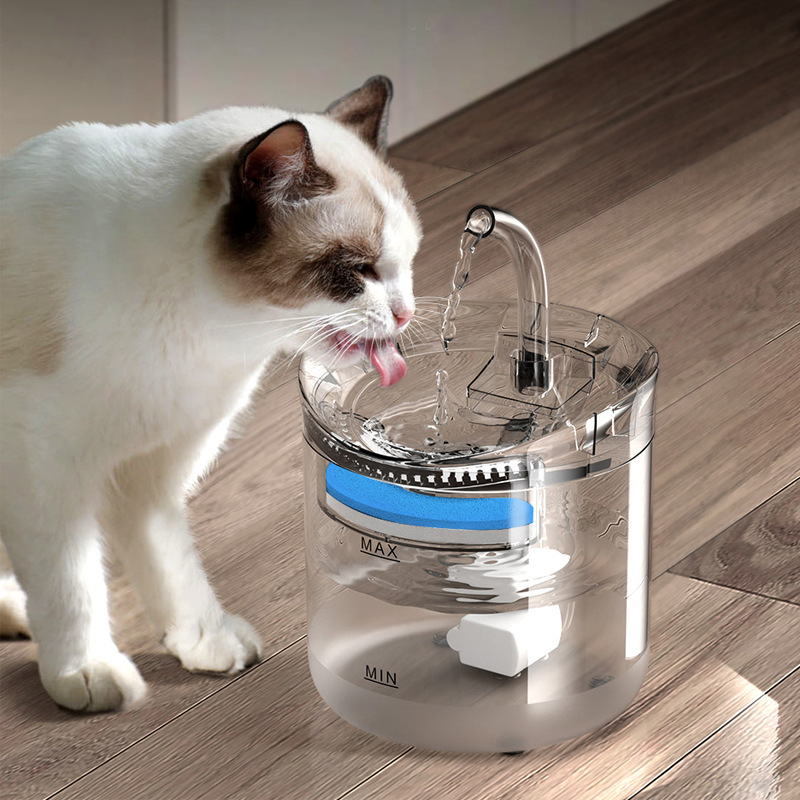
An automatic pet water fountain for cats gives a cat fresh moving water through the day without constant refills from the owner. Many cats drink too little from a still bowl, since standing water can taste stale and collect dust, and a cat that drinks too little may face urinary and kidney trouble over time. A fountain solves that problem by keeping water in motion, passing it through a filter, and topping it up from a reservoir, so the water stays clean and inviting. Automatic models go a step further, switching the pump on and off by themselves, sensing the water level, and running quietly in the background. This guide explains why cats prefer moving water, how an automatic fountain works, how to pick the right size, what to look for in filters and pumps, and how to keep the fountain clean.
Why Cats Prefer Moving Water
Cats evolved as desert animals, and their instinct still tells them to trust running water over a still pool. In the wild, moving water is far more likely to be fresh, while a still puddle may be stagnant and unsafe, so a cat that sniffs a bowl and walks away is often following that old instinct rather than being fussy. Many owners notice the same behaviour at home, with a cat that ignores a full bowl yet drinks eagerly from a dripping tap or a running shower. A fountain copies that running source, giving the cat a stream to drink from and a sound that draws it back through the day. Cats that drink more tend to stay better hydrated, which supports kidney health and helps prevent urinary problems that vets see often in cats that live indoors. A fountain also keeps the water oxygenated, which improves the taste and keeps it fresher for longer than a bowl that sits untouched for hours. Once a cat accepts the fountain, most owners find the water level drops faster than it ever did with a bowl, which is a clear sign the cat is drinking well.
How an Automatic Fountain Works
An automatic fountain pairs a small pump with a reservoir and a set of sensors that manage the flow without constant attention from the owner. The pump lifts water from the base through a filter and up to a spout, where it falls back into the bowl in a steady stream that the cat can drink from. A water level sensor watches the reservoir, and when the level drops low the fountain can slow the pump or switch it off to protect the motor from running dry. Some fountains use a motion sensor, starting the flow when the cat comes near and stopping it when the cat walks away, which saves power and keeps the room quiet at night. The filter sits in the path of the water and traps hair, dust, and food crumbs, while a carbon layer helps remove odours and improves taste. The parts come apart for cleaning, and the pump lifts out so the owner can rinse away any slime or mineral build up. Understanding these parts helps an owner spot a problem early, such as a weak flow that means the filter needs changing or the pump needs a clean.
Choosing the Right Size and Capacity
Size and capacity decide whether a fountain suits the household, so match the fountain to the number of cats and the space available. A single cat does well with a small to medium fountain that holds enough water for a day or two, while a home with several cats needs a larger reservoir so the water never runs low between refills. A wide and shallow drinking area suits cats that dislike wetting their whiskers, while a deeper bowl suits cats that like to lap from a pool. Check the footprint before buying, since a fountain needs a flat and stable spot near a power outlet, with room around it for the cat to approach from any side. A heavy base matters in a busy home, since a light fountain can be tipped by a playful cat or knocked over during a dash through the room. Look for a fountain made from ceramic or stainless steel if the cat has a sensitive chin, since those materials resist the bacteria that can build up on scratched plastic. For owners browsing everyday pet care, Skyrocs offers a helpful starting point, and the pet supplies range covers fountains and other daily items for cats.
Filters, Pumps, and Quiet Operation
Filters and pumps decide how clean the water stays and how quiet the fountain runs, so both deserve a close look before buying. A good filter has a fine mesh that catches hair and crumbs, plus a carbon layer that takes out odours and keeps the taste fresh. Filters need regular changing, so check how often the maker suggests a new one and how easy the replacements are to buy. A pump that runs quietly matters more than most buyers expect, since a fountain sits in the home all day and a buzzing pump can put off both the cat and the owner. Look for a pump that the maker describes as silent or low noise, and place the fountain on a mat if the surface below it hums or vibrates. The pump should lift out easily for cleaning, since a clogged pump is the most common cause of a weak or noisy flow. A fountain with a dry run cut off protects the pump when the water runs low, which is a useful safety feature in a busy home. Clean water and quiet running are the two things that keep a cat coming back, so a fountain that delivers both is worth the extra care in choosing.
Cleaning and Daily Care
A fountain needs regular cleaning, since moving water still collects hair, dust, and a slimy film over time. Rinse the bowl and the reservoir every day, and give the whole fountain a full wash with hot water and mild dish soap at least once a week. Take the pump apart and rinse the impeller, which is the small spinning part inside, since hair wrapped around it will slow the flow and make the pump noisy. Soak the parts in hot water with a little white vinegar to dissolve mineral scale, then rinse well so no vinegar taste remains. Change the filter on the schedule the maker suggests, and sooner if the water starts to taste stale or the flow weakens. Keep the fountain away from direct sun, since warmth and light encourage algae to grow in the reservoir. A clean fountain keeps the water tasting fresh, and fresh water keeps the cat drinking, so the weekly wash is time well spent. If the cat stops using the fountain, a deep clean is the first thing to try, since a stale smell or a slimy surface is often the reason a cat walks away.
Frequently Asked Questions
Does an automatic pet water fountain for cats really help cats drink more?
Yes, most cats drink more from a fountain, since moving water matches their instinct to trust a running source over a still bowl.
How often should I change the filter in an automatic pet water fountain for cats?
Change the filter on the schedule the maker suggests, which is often every few weeks, and sooner if the flow weakens or the water tastes stale. A fresh filter keeps the water clean and the pump running smoothly.
Is an automatic pet water fountain for cats safe to leave running at night?
Yes, a well made fountain is safe to run through the night, and many models have a dry run cut off that stops the pump if the water runs low. Keep the cord out of reach and check the water level before bed.
What size automatic pet water fountain for cats should I buy?
Choose a fountain that holds enough water for a day or two, with a wide and shallow drinking area for cats that dislike wet whiskers. Homes with several cats need a larger reservoir so the water never runs low between refills.
Why has my cat stopped using an automatic pet water fountain for cats?
A cat often stops using a fountain when the water tastes stale, the pump has grown noisy, or slime has built up on the surface. Give the fountain a deep clean, change the filter, and check the pump, then place it in a quiet spot away from the litter tray.