
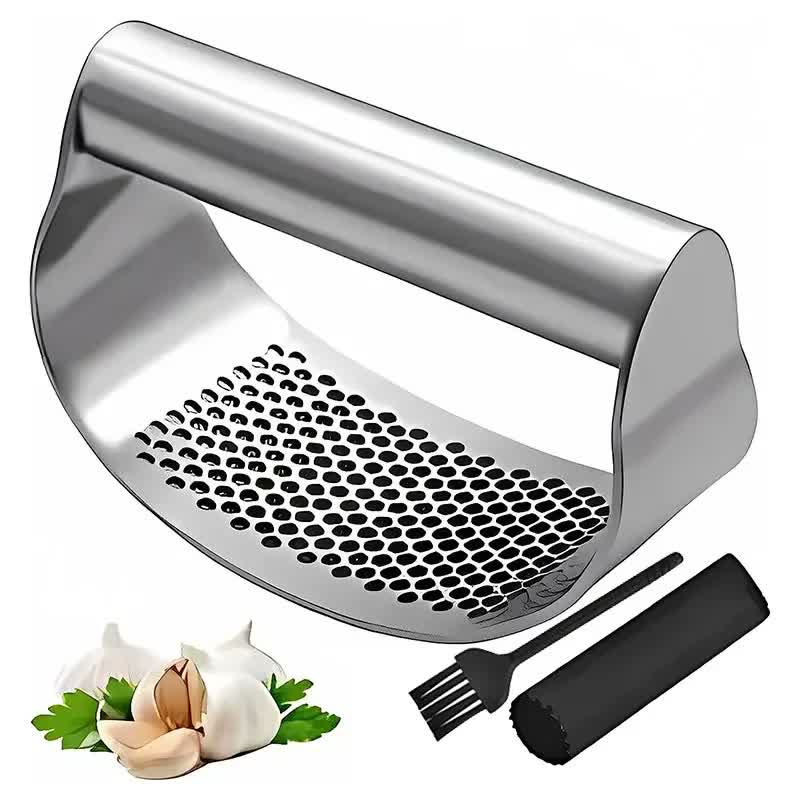
A stainless steel garlic press easy clean design turns a fiddly chore into a quick squeeze, crushing cloves into fine pulp in seconds and rinsing clean under the tap. Fresh garlic lifts the flavour of sauces, soups, and roasts, but peeling and mincing by hand takes time and leaves fingers smelling for hours. A good press skips the peeling, presses the clove straight through fine holes, and leaves the skin behind for easy disposal. This guide explains how a steel press works, what to look for in size and grip, how to clean it without a brush battle, and how to keep it sharp and rust free through years of daily cooking.
Why a Steel Press Beats Mincing by Hand
Mincing garlic by hand takes patience, a sharp knife, and a steady board, while a press does the same job with one squeeze. The press forces the clove through small holes, which breaks the flesh into fine even pieces that melt into sauces and spread through dressings. Hand mincing often leaves uneven chunks that burn in a hot pan, while pressed garlic cooks evenly and blends smoothly. A steel press also keeps the smell off the hands, since the fingers never touch the crushed clove. Speed matters on busy nights, and a press turns a clove into ready garlic in moments, which makes home cooks far more likely to use fresh garlic instead of reaching for a jar. The press also wastes less, since the whole clove goes through the holes and only the dry skin stays behind. For cooks who love fresh flavour but hate the prep, a steel press is a small tool that earns its drawer space every day.
Choosing the Right Size and Grip
Size and grip decide whether a press feels easy or tiring in the hand. A full size press suits large hands and large cloves, while a compact press suits small kitchens and small hands. Look for long handles that give leverage, since short handles force the wrist to work harder. A comfortable grip matters for cooks with weak hands or stiff joints, so handles with a slight curve and a smooth finish beat thin flat handles. Weight also counts, since a heavy press feels solid but tires the hand, while a very light press may bend under pressure. Check the chamber size as well, since a roomy chamber takes large cloves without trimming, while a small chamber needs the clove cut down first. The hinge should move smoothly with no wobble, and the plunger should meet the plate evenly so no garlic slips around the edge. Hold the press before buying when possible, and squeeze it empty to feel the action. A press that fits the hand will be reached for daily, while one that strains the wrist will gather dust.
How to Use a Garlic Press Well
Good results start with a fresh firm clove, since soft or sprouting garlic presses poorly and tastes bitter. Pop the clove into the chamber with the skin still on, since a good press pushes the flesh through and leaves the skin behind. Squeeze steadily with both hands, letting the pressure build rather than forcing a sudden jerk. Hold the press over the pan or bowl so the crushed garlic falls straight where it is needed. Scrape the plate with the back of a knife to catch every bit, and lift the skin out before the next clove. For sauces and dressings, press the garlic straight into the bowl and stir it through while it is fresh. For roasts and stir fries, press the garlic near the end of cooking, since long heat turns it bitter. Rinse the press right after use, before the pulp dries and hardens in the holes. A few seconds of care at the time of use saves minutes of scrubbing later, and keeps the press ready for the next meal.
Cleaning Without the Hassle
Cleaning is where a good press proves its worth, and the best designs rinse clean in seconds. Run the press under warm water straight after use, and push a fingertip across the plate to clear the holes. Many easy clean presses come with a small cleaning tool that pushes trapped pulp out of the holes in one pass. A press that opens fully or splits apart is easier to wash, since every surface can be reached. For households that also shop for pets, Skyrocs offers a helpful starting point, and the pet supplies range covers daily items for cats and dogs. Avoid soaking a steel press for hours, since standing water can dull the finish and stiffen the hinge. A soft brush reaches the holes when pulp has dried, and a little washing up liquid lifts any oily film. Dry the press fully before putting it away, since trapped water can spot the steel. With a quick rinse and a proper dry, an easy clean press stays fresh and ready, and cleaning never becomes a reason to skip fresh garlic.
Care, Storage, and Long Life
Stainless steel lasts for years when it is treated well, and a few habits keep a press working like new. Dry the press after every wash, and store it in a dry drawer rather than a damp sink-side rack. Keep the hinge lightly oiled with a drop of cooking oil now and then, so the action stays smooth. Avoid the dishwasher when the maker advises hand washing, since harsh tablets and high heat can dull the finish and loosen the hinge. Check the plate and plunger for wear each month, and replace the press if the holes widen or the plunger no longer meets the plate evenly. Store the press with the cleaning tool beside it, so the next cook can find both at once. A press that is cleaned, dried, and stored with care will crush cloves cleanly for years, and it will stay a quiet helper in the kitchen rather than a rusty tool at the back of the drawer.
Frequently Asked Questions
Does a stainless steel garlic press easy clean design need peeling first?
Most steel presses work with the skin still on, pushing the flesh through the holes and leaving the skin behind. Peel only when a clove is very large or the skin is thick and dry, and lift the skin out before pressing the next clove.
How do I stop garlic from sticking in the press holes?
Rinse the press under warm water straight after use, before the pulp dries and hardens. Push a fingertip or the cleaning tool across the plate, and use a soft brush for any pulp that has set in the holes.
Can a garlic press go in the dishwasher?
Many steel presses are dishwasher safe, but hand washing keeps the finish brighter and the hinge smoother for longer. Check the care notes that come with the press, and dry it fully after any wash.
Will a garlic press crush ginger as well?
A sturdy steel press can crush small pieces of peeled ginger, though the fibres may clog the holes. Cut ginger into small chunks first, and clean the plate well after use so no fibres dry in place.
When should a garlic press be replaced?
Replace the press when the hinge wobbles, the holes widen, or the plunger no longer meets the plate evenly. A worn press leaves chunks behind and strains the hand, while a sound press crushes cleanly with one squeeze.