
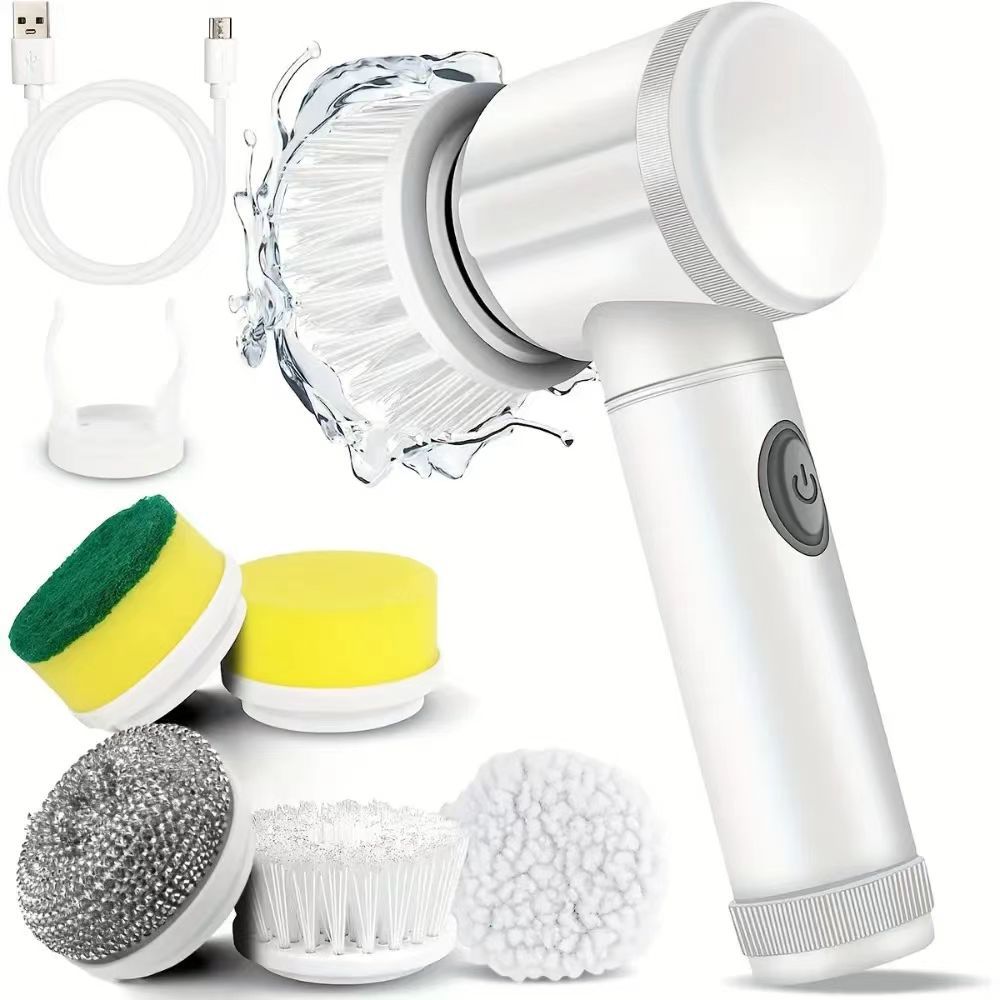
Scrubbing by hand takes time, effort, and patience, especially on surfaces that have built up grime over weeks. Tiles, grout, sinks, stovetops, and bathtubs all demand repeated pressure, and the work can leave arms tired and hands sore. An electric cleaning brush 5 head set changes the job by adding powered rotation or vibration to the brush head. Instead of pushing hard and repeating the same motion, the user guides the brush while the motor does the scrubbing. With several interchangeable heads in one set, the same tool can move from a bathroom tile to a kitchen sink to a shower screen without changing tools. The result is faster cleaning, deeper cleaning in corners and grout lines, and a routine that feels far less like hard labour.
What an Electric Cleaning Brush Set Includes
A typical set centres on a rechargeable handle with a motor, plus a group of brush heads that attach to that handle. Each head suits a different surface or task. A large flat brush covers broad areas such as floors and shower walls. A smaller round brush works into corners, around taps, and along grout lines. A pointed or dome-shaped head reaches into tight spots that a flat brush cannot touch. A softer head suits delicate surfaces that could scratch, while a firmer head tackles stubborn marks on hard tiles and sinks. Some sets also include a sponge or cloth pad for wiping and polishing after scrubbing. The handle usually offers more than one speed, so the user can choose a gentle action for light cleaning and a stronger action for ground-in dirt. Charging is normally done with a cable, which removes the need to buy and replace batteries. Keeping the heads organised in one place, dry between uses, and labelled by task helps the set stay useful rather than becoming a drawer full of forgotten attachments.
How Interchangeable Heads Clean Different Surfaces
The value of a multi-head set lies in matching the head to the surface. Bathroom tiles benefit from a firm round brush that follows grout lines and lifts soap residue from corners. A flat brush covers the broad face of a shower wall or floor tile in fewer passes. Kitchen sinks and stovetops respond well to a medium brush that scrubs without gouging stainless steel or enamel, provided the cleaning product is suitable for that surface. Around taps and drains, a small head reaches the curves where limescale and grime collect. A soft head suits glass shower screens, polished surfaces, and areas where scratching is a concern. Using the wrong head can slow the work or mark a surface, so it pays to start with the gentlest head that still shifts the dirt, then move to a firmer head only if needed. Always test a new head on a small, hidden area first. That simple habit protects finishes and builds confidence in using the full set across the home.
Why Powered Scrubbing Saves Time and Effort
Manual scrubbing relies on arm strength and repetition. Powered scrubbing relies on the motor. The brush head moves rapidly while the user simply guides it across the surface, which reduces the force needed from shoulders, elbows, and wrists. That matters for anyone who finds sustained scrubbing tiring, and it matters for larger jobs such as a full bathroom clean, where hand scrubbing can take a long time. Powered action also reaches into grout lines and textured surfaces more evenly than a cloth, because the bristles move consistently rather than in uneven strokes. Cleaning solution works better too, since the brush spreads it across the surface and agitates it into the dirt. The practical outcome is a clean that looks more even, achieved in less time, with less fatigue. For households that clean in short sessions, that efficiency is valuable. A bathroom that once needed a long weekend effort can be kept in good shape with shorter, regular sessions, because the tool removes the hardest part of the work.
Choosing Heads, Speeds, and Cleaning Products
Choosing well means thinking about the home, not just the tool. List the surfaces that need regular cleaning, and check that the set includes a head for each one. A home with tiled bathrooms and a tiled kitchen floor needs a different mix from a home with mainly smooth countertops and a single shower. Speed control matters as well. A low speed suits daily wiping and delicate finishes, while a higher speed suits weekly deep cleaning. Look for a handle that feels comfortable to hold when wet, with controls that are easy to reach without changing grip. Battery life matters for longer sessions, so check how the handle charges and how long a charge lasts in normal use. Cleaning products deserve equal attention. Use products suited to each surface, avoid abrasive pastes on delicate finishes, and rinse thoroughly after scrubbing so residue does not attract new dirt. For other everyday home essentials, browse the kitchen gadgets category when planning a household order, and judge the set by whether its heads genuinely match the rooms in the home.
Care, Storage, and Getting the Most From the Set
Good care keeps a brush set effective for a long time. Rinse each head after use, remove hair and debris from the bristles, and allow heads to dry fully before storage. Damp heads stored in a closed container can develop odour and wear faster. Wipe the handle dry, keep the charging port clean and dry, and store the set where heads will not be crushed. Replace a head when bristles bend, splay, or no longer hold their shape, since a worn head cleans poorly and can drag across surfaces. A simple routine helps: use the set little and often, rather than waiting until dirt has built up into a major job. Clean one room at a time, work from top to bottom so dirty water does not run onto cleaned areas, and rinse the surface after scrubbing. Keep cleaning products, cloths, and the brush set together, so starting a session takes moments rather than a search through cupboards. A well-kept set, used regularly, turns cleaning from a dreaded chore into a manageable habit. To explore current home and kitchen ranges, visit the Skyrocs homepage for ideas and product details.
Frequently Asked Questions
What is an electric cleaning brush 5 head set used for? It is used for powered scrubbing across the home, including bathroom tiles, grout, sinks, stovetops, shower screens, and floors. Different heads suit different surfaces, so one handle can cover several cleaning tasks.
Can it damage tiles or grout? It should not, when the right head and speed are used. Start with a gentle head and a low speed, test on a hidden area, and avoid abrasive products on delicate finishes. A firm head is for hard, durable surfaces only.
How do I change the brush head? Most sets use a simple push, twist, or click fitting. Remove the used head, rinse it, attach the next head firmly, and check that it sits straight before switching the brush on.
How do I clean the brush heads themselves? Rinse heads under running water after each use, remove debris from the bristles, and let them dry fully in open air. Do not store wet heads in a sealed container.
Is a powered brush better than scrubbing by hand? For many households, yes. The motor supplies the scrubbing motion, which saves time and reduces strain on arms and wrists. Hand scrubbing still has a place for very delicate items, but powered brushing handles most routine bathroom and kitchen cleaning faster.