
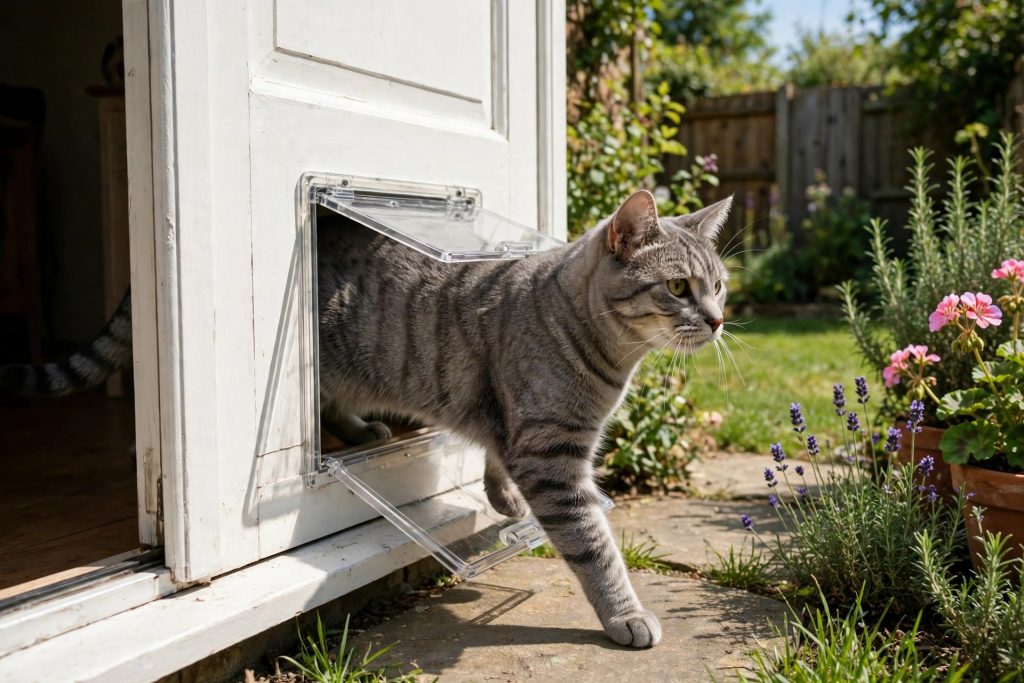
A cat flap for free roaming lets a cat come and go as it pleases, day or night, and a cat that can step out on its own feels calmer, freer, and more settled in the home. Many cats wait by the door, meow, or paw at the frame when they want the garden, and a cat flap answers that need with a small flap the cat can push open with its nose or shoulder. The flap sits in a back door or a wall, and the cat learns to use it in a few days, stepping out to explore and coming back inside when it wants warmth and rest. This guide explains why free roaming matters, how a cat flap works, what to look for when you buy one, how to fit and train your cat to use it, and how to keep it clean and ready for daily use.
Why Free Roaming Matters
Free roaming matters because a cat that can go out when it wants to is calmer, fitter, and happier, and a calm cat is easier to live with. A cat that waits too long by the door may grow restless, meow through the night, or scratch at the frame, since it cannot tell the owner in time. A cat flap gives the cat a choice, and choice lowers stress, since the cat can step out to explore, climb, and hunt, then come back inside when it wants warmth. Older cats need free roaming too, since a flap the cat can push open without help suits a senior pet that moves slowly. A cat flap also helps on busy days, since the owner may be away or asleep, and the cat can still reach the garden without waiting for someone to open the door. A cat that roams freely sleeps better at night, since it has spent the day moving in and out at its own pace.
How a Cat Flap for Free Roaming Works
A cat flap for free roaming works by giving the cat a small flap set into a door or a wall, so the cat can push through with its nose or shoulder and the flap falls shut behind it. The flap hangs from a frame, and the cat learns to push it open with a gentle nudge, stepping through to the garden and back again. Most flaps are made from a flexible panel that bends as the cat passes, then swings back into place, so the opening stays shut when the cat is not using it. Some flaps have a magnetic strip along the edge, which holds the flap shut against wind and draughts, while others use a brush seal to keep the cold out. The frame holds the flap steady, and a lock dial lets the owner set the flap to open both ways, in only, out only, or locked shut. A flap that is sized to the cat lets the pet pass without ducking too low or squeezing through a tight gap.
Choosing the Right Cat Flap for Your Pet
Choosing a cat flap starts with the size of your cat, since the flap must let the pet pass without ducking too low or squeezing through a tight gap. Measure your cat across the shoulders and from chest to floor, and pick a flap with an opening that leaves a little room on each side. Look for a flap that moves easily, since a stiff flap will put a nervous cat off, and a flap that swings shut on its own keeps draughts out. The lock matters too, since a flap with a simple dial lets you set it to open both ways, in only, out only, or locked shut at night. A flap with a magnetic edge suits a windy garden, while a clear flap suits a cat that likes to see the garden first. For pet owners looking for everyday pet items, Skyrocs offers a helpful starting point, and the pet supplies range covers daily items for homes that share their life with a pet.
A flap that matches the look of your home also pleases the owner, since a neat frame blends with the back door and a tidy flap looks like part of the house. Check that the flap has no sharp edges, since a sharp edge can catch the fur as the cat passes through. A flap that is easy to fit suits a first time installer, and a flap that comes with a clear guide saves time on the day you fit it. Some owners choose a flap with a tunnel for a thick wall, while others pick a simple panel for a standard door. A flap that is too small will frustrate the cat, so pick a size that suits the cat as it grows. A good flap earns its place when the cat uses it every day.
Using Your Cat Flap for Free Roaming
Using a cat flap well starts with fitting it at the right height, since a flap that sits too high forces the cat to jump, and a flap that sits too low lets rain in. Fit the flap so the bottom sits near the floor, and the cat can step through without lifting its legs high. Train the cat with patience, and hold the flap open first, letting the cat see the garden, then tempt it through with a treat. Let the cat walk through on its own, and praise it gently when it passes, so the cat links the flap with a pleasant trip. Give the cat a few days to learn, and watch for signs that it uses the flap without prompting. Keep the area on each side clear, so the cat can approach the flap without squeezing past clutter.
Check the flap now and then while the cat uses it, and make sure it swings shut after the cat passes, so draughts stay out. Set the lock dial to locked at night when you want the cat indoors, and set it back to both ways in the morning before the cat wakes. Never push the cat through the flap, since a cat that is forced through may avoid the flap after. A flap that stays in one place becomes a familiar route, and a familiar route helps the cat move freely through the day. A flap that closes softly keeps the cat calm, and a calm cat uses the flap more often.
Cleaning and Storing Your Cat Flap for Free Roaming
A cat flap earns its place when it is easy to clean, since mud, fur, and paw prints collect on the flap after daily use. Wipe the flap with a damp cloth, and wash it with a little mild soap when the mud has dried on. Rinse it well, let it dry fully, and check the frame while you clean, looking for any wear at the hinges or the seal. A flap that is wiped often stays fresh, and a fresh flap smells clean, which helps the cat use it without fuss. Keep the lock dial free of dirt, so it turns smoothly when you set it at night. A flap that is checked now and then stays smooth, and a quick look at the flap and the seal before each season keeps the flap ready for daily use.
Frequently Asked Questions
Is a cat flap for free roaming needed for every cat?
It is not needed for every cat, yet it helps cats that like the garden, older cats, and busy homes, so the cat can go out and come back in without waiting at the door.
How does a cat flap for free roaming work?
The flap gives the cat a small opening set into a door or a wall, so the cat pushes it open with its nose or shoulder, steps through to the garden, and the flap falls shut behind it.
Can a cat flap for free roaming fit any door?
Yes, cat flaps come in sizes to suit standard doors and thick walls alike, so measure your cat and your door first, then pick a flap with a frame and a tunnel that fits the thickness.
How do I clean a cat flap for free roaming after use?
Wipe the flap with a damp cloth, wash it with a little mild soap when the mud has dried on, rinse it well, let it dry fully, and check the frame and the seal while you clean.
What should I look for when buying a cat flap for free roaming?
Look for a flap that fits your cat without squeezing, a flap that moves easily and swings shut on its own, a firm frame, a lock dial for the night, and a seal that keeps draughts out.