
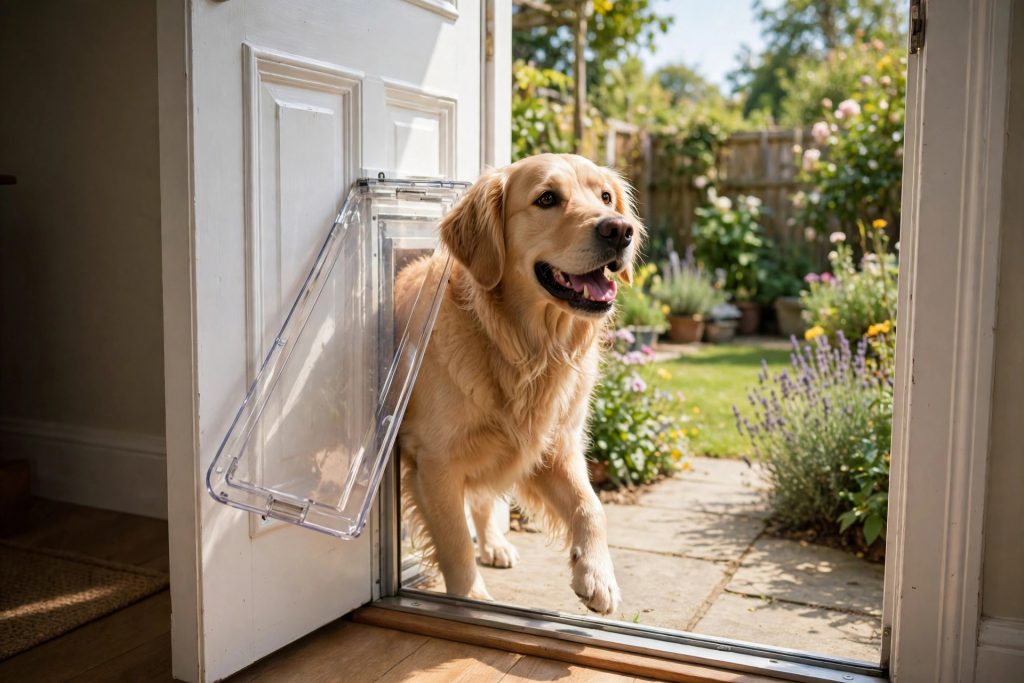
A dog door for easy access lets a dog come and go without waiting at the door, and a dog that can step out on its own feels calmer, freer, and more settled in the home. Many dogs wait by the door, whine, or scratch at the frame when they need the garden, and a dog door answers that need with a simple flap the dog can push open with its nose or shoulder. The door sits in a back door or a wall, and the dog learns to use it in a few days, stepping out for fresh air and coming back inside when it wants rest. This guide explains why easy access matters, how a dog door works, what to look for when you buy one, how to fit and train your dog to use it, and how to keep it clean and ready for daily use.
Why Easy Access Matters
Easy access matters because a dog that can go out when it needs to is calmer, cleaner, and happier, and a calm dog is easier to live with. A dog that waits too long by the door may grow restless, bark, or have an accident indoors, since it cannot tell the owner in time. A dog door gives the dog a choice, and choice lowers stress, since the dog can step out for fresh air, stretch its legs, and come back inside when it wants rest. Older dogs need easy access most of all, since stiff joints make waiting painful, and a door the dog can push open without help suits a senior pet. A dog door also helps on busy days, since the owner may be away or busy, and the dog can still reach the garden without waiting for someone to open the door. A dog that goes out freely sleeps better at night, since it has spent the day moving in and out at its own pace.
How a Dog Door for Easy Access Works
A dog door for easy access works by giving the dog a flap set into a door or a wall, so the dog can push through with its nose or shoulder and the flap falls shut behind it. The flap hangs from a frame, and the dog learns to push it open with a gentle nudge, stepping through to the garden and back again. Most flaps are made from a flexible panel that bends as the dog passes, then swings back into place, so the opening stays shut when the dog is not using it. Some doors have a magnetic strip along the edge, which holds the flap shut against wind and draughts, while others use a brush seal to keep the cold out. The frame holds the flap steady, and a lock panel slides into place when the owner wants to close the door at night. A door that is sized to the dog lets the pet pass without ducking too low or squeezing through a tight gap.
Choosing the Right Dog Door for Your Pet
Choosing a dog door starts with the size of your dog, since the door must let the pet pass without ducking too low or squeezing through a tight gap. Measure your dog from shoulder to floor and across the chest, and pick a door with an opening that leaves a little room on each side. Look for a flap that moves easily, since a stiff flap will put a nervous dog off, and a flap that swings shut on its own keeps draughts out. The frame matters too, since a frame that fits your door or wall firmly will not rattle when the dog passes, and a frame with a lock panel lets you close the door at night. A flap with a magnetic edge suits a windy garden, while a clear flap suits a dog that likes to see the garden first. For pet owners looking for everyday pet items, Skyrocs offers a helpful starting point, and the pet supplies range covers daily items for homes that share their life with a pet.
A door that matches the look of your home also pleases the owner, since a neat frame blends with the back door and a tidy flap looks like part of the house. Check that the flap has no sharp edges, since a sharp edge can catch the fur as the dog passes through. A door that is easy to fit suits a first time installer, and a door that comes with a clear guide saves time on the day you fit it. A door that is too small will frustrate the dog, so pick a size that suits the dog as it grows. A good door earns its place when the dog uses it every day.
Using Your Dog Door for Easy Access
Using a dog door well starts with fitting it at the right height, since a door that sits too high forces the dog to jump, and a door that sits too low lets rain in. Fit the door so the bottom of the flap sits near the floor, and the dog can step through without lifting its legs high. Train the dog with patience, and hold the flap open first, letting the dog see the garden, then tempt it through with a treat. Let the dog walk through on its own, and praise it gently when it passes, so the dog links the flap with a pleasant trip. Give the dog a few days to learn, and watch for signs that it uses the door without prompting. Keep the area on each side clear, so the dog can approach the door without squeezing past clutter.
Check the flap now and then while the dog uses it, and make sure it swings shut after the dog passes, so draughts stay out. Slide the lock panel into place at night, so the door stays shut while the house sleeps, and remove it in the morning before the dog wakes. Never push the dog through the flap, since a dog that is forced through may avoid the door after. A door that stays in one place becomes a familiar route, and a familiar route helps the dog move freely through the day. A flap that closes softly keeps the dog calm, and a calm dog uses the door more often.
Cleaning and Storing Your Dog Door for Easy Access
A dog door earns its place when it is easy to clean, since mud, fur, and paw prints collect on the flap after daily use. Wipe the flap with a damp cloth, and wash it with a little mild soap when the mud has dried on. Rinse it well, let it dry fully, and check the frame while you clean, looking for any wear at the hinges or the seal. A flap that is wiped often stays fresh, and a fresh flap smells clean, which helps the dog use it without fuss. Keep the lock panel in a safe place when it is not in use, so it stays clean and ready for the night you need it. A door that is checked now and then stays smooth, and a quick look at the flap and the seal before each season keeps the door ready for daily use.
Frequently Asked Questions
Is a dog door for easy access needed for every dog?
It is not needed for every dog, yet it helps dogs that need the garden often, older dogs, and busy homes, so the dog can go out and come back in without waiting at the door.
How does a dog door for easy access work?
The door gives the dog a flap set into a door or a wall, so the dog pushes it open with its nose or shoulder, steps through to the garden, and the flap falls shut behind it.
Can a dog door for easy access fit any door?
Yes, dog doors come in sizes to suit standard doors and thick walls alike, so measure your dog and your door first, then pick a door with a frame and a tunnel that fits the thickness.
How do I clean a dog door for easy access after use?
Wipe the flap with a damp cloth, wash it with a little mild soap when the mud has dried on, rinse it well, let it dry fully, and check the frame and the seal while you clean.
What should I look for when buying a dog door for easy access?
Look for a door that fits your dog without squeezing, a flap that moves easily and swings shut on its own, a firm frame, a lock panel for the night, and a seal that keeps draughts out.