
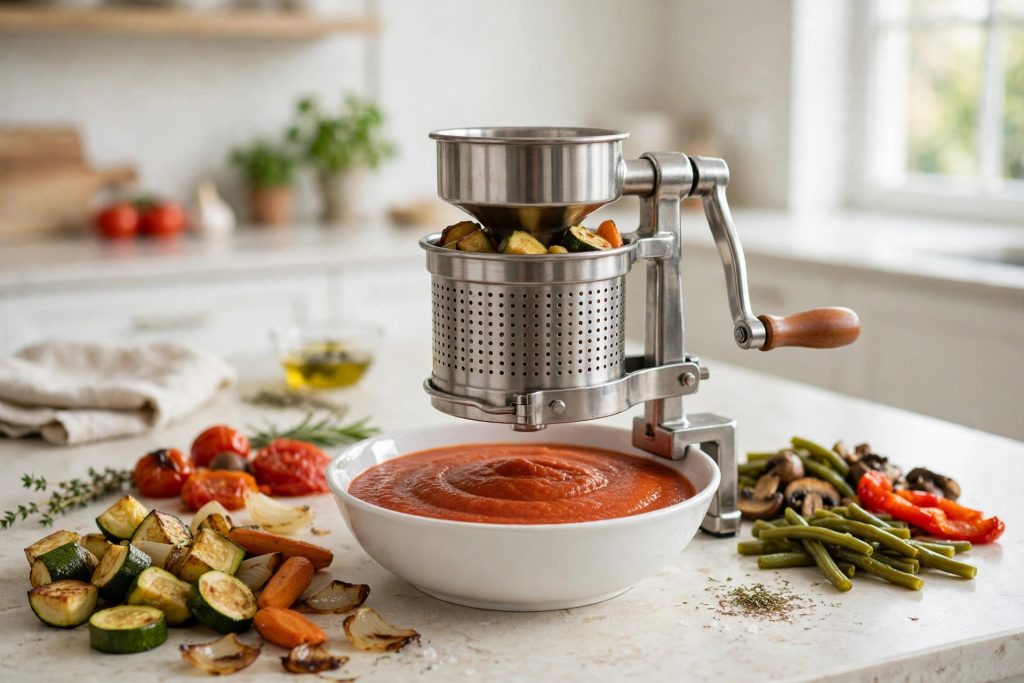
A food mill for smooth purees makes everyday cooking easier, and it earns its place in a busy kitchen by turning simple ingredients into neat results with little fuss. Many home cooks reach for a food mill when they want soups, sauces, and mashed vegetables to look and feel well prepared, and a good one saves time without adding clutter to the bench. A food mill made from stainless steel feels solid in the hand, and its crank and perforated disc work together to handle cooked potatoes and soft tomatoes with steady control. This guide explains why smooth purees matter in a home kitchen, how a food mill works, what to look for when you buy one, how to use it well, and how to keep it clean and ready for the next meal. Whether you cook for family meals or for a quiet supper at home, a food mill helps you prepare tomato sauce and apple puree with care and confidence.
Why Smooth Purees Matter
Smooth purees matter because neat preparation changes how a dish looks and tastes, and a food mill helps you reach that result without long effort. When cooked potatoes come out uneven, the dish can feel rough and unfinished, while even results from a food mill give the meal a calm and tidy finish. A food mill also saves time, since you can prepare cooked potatoes in moments and move on to the next part of the meal without stopping to fix rough edges. Home cooks who prepare food often will notice the difference most, because a reliable food mill turns a repeated chore into a quick and simple step. A well made food mill also brings a sense of order to the kitchen, since each piece of soft tomatoes comes out in a shape that suits the dish and the plate. For families who cook at home most days, a food mill is a small tool with a steady job, and it earns its keep by making soups, sauces, and mashed vegetables easier to prepare. The best reason to own a food mill is simple, since it helps you cook with less waste and more care, and it lets the ingredients speak for themselves.
How a Food Mill Works
A food mill works by guiding food through a crank and perforated disc, so each piece comes out in a neat and even form with steady pressure from your hand. Place cooked potatoes in position, hold the food mill steady on the bench or over a bowl, and move the working part with a smooth and even motion. The stainless steel parts meet the food cleanly, so soft tomatoes do not tear or crush, and the result keeps its shape for serving. Many food mills are made in a size that suits a home kitchen, with a handle or frame that keeps your fingers away from the working edge. A good food mill needs little force, since a sharp edge and a steady guide do most of the work, and you only need to keep the food in place. Once you learn the motion, the work feels natural, and you can prepare a full batch of cooked potatoes in a short time without tiring your hand. Some food mills come apart for cleaning, while others fold or rest flat in a drawer, and both styles suit a kitchen where bench space is limited.
Choosing the Right Food Mill for Your Kitchen
Choosing a food mill starts with size, since the tool should suit the food you prepare most often and the space you have for storage. Look for a food mill made from stainless steel or a sturdy food safe material, with parts that feel solid and joints that hold firm when you press down. The handle should feel comfortable in your hand, and the working edge should meet the food cleanly without slipping or catching. Check that the food mill is easy to take apart and clean, since a tool that traps food in small gaps will be hard to keep fresh. Think about the meals you cook most, since a food mill for tomato sauce may need a different shape from one made mainly for apple puree. A food mill with a simple shape is often the best choice, since it has fewer parts to wash and fewer places for food to hide. Hold the food mill in your hand before you buy it when you can, and check that it feels balanced and steady rather than light and flimsy. For home cooks looking for everyday kitchen items, Skyrocs offers a helpful starting point, and the pet supplies range covers daily items for homes that share their kitchen with a cat or a dog. A food mill that suits your hand, your food, and your storage will serve you well for a long time, so take a moment to compare a few options before you settle on one.
Using a Food Mill at Home
Using a food mill well starts with preparation, so wash cooked potatoes and trim away any tough ends before you place them in the tool. Work on a steady bench with a bowl or board close by, and keep your fingers clear of the working edge while you guide the food through. Move with a smooth and even motion, and let the food mill do the work rather than forcing the food through with heavy pressure. Prepare food in small batches when you can, since a full load can slip or jam, while a steady pace gives neat and even results. For tomato sauce, place the food so the cut or press lands where you want it, and check the first few pieces before you carry on with the rest. For apple puree, the same care pays off, since even pieces cook and serve more evenly than a mix of thick and thin pieces. Keep the food mill clean as you work, and wipe away crumbs or juice before they dry, so the next batch comes out just as neatly as the first.
Cleaning and Storing a Food Mill
A food mill earns its place when it is easy to clean, since food that dries on the working parts can be hard to lift away later. Rinse the food mill under warm water soon after use, and wash it with a little mild soap and a soft cloth or brush. Pay attention to the crank and perforated disc, since food can gather in small gaps, and a gentle brush will lift it away without scratching the surface. Rinse again with clean water, and dry the food mill fully with a soft cloth before you store it, since a damp tool left in a drawer can smell stale. Store the food mill in a dry drawer or on a shelf where it will not be pressed against sharp objects that could dull the edge. Check the handle and joints now and then, and tighten or replace any loose part before it becomes a problem in use. A food mill that is cleaned and dried after each use will stay in good shape, and it will be ready the next time you need it. Keep the food mill away from strong heat when you store it, and keep it out of long sun, since heat and sun can wear the materials over time.
Frequently Asked Questions
Is a food mill for smooth purees needed in a home kitchen?
It is not needed for every meal, yet it makes soups, sauces, and mashed vegetables easier to prepare, so cooks who prepare food often will find it useful and will reach for it again and again.
How does a food mill for smooth purees work?
It guides cooked potatoes through a crank and perforated disc, so each piece comes out neat and even, and a smooth motion with steady pressure gives the best result.
Can a food mill for smooth purees handle cooked potatoes?
It handles cooked potatoes well when they are at the right stage, so trim away tough ends, work in small batches, and let the tool do the work.
How do I clean a food mill for smooth purees after use?
Rinse it under warm water soon after use, wash it with a little mild soap and a soft cloth, rinse it again, and dry it fully before you store it.
What should I look for when buying a food mill for smooth purees?
Look for a solid build in stainless steel or a sturdy food safe material, a comfortable handle, a clean working edge, and a shape that suits your kitchen and your meals.