
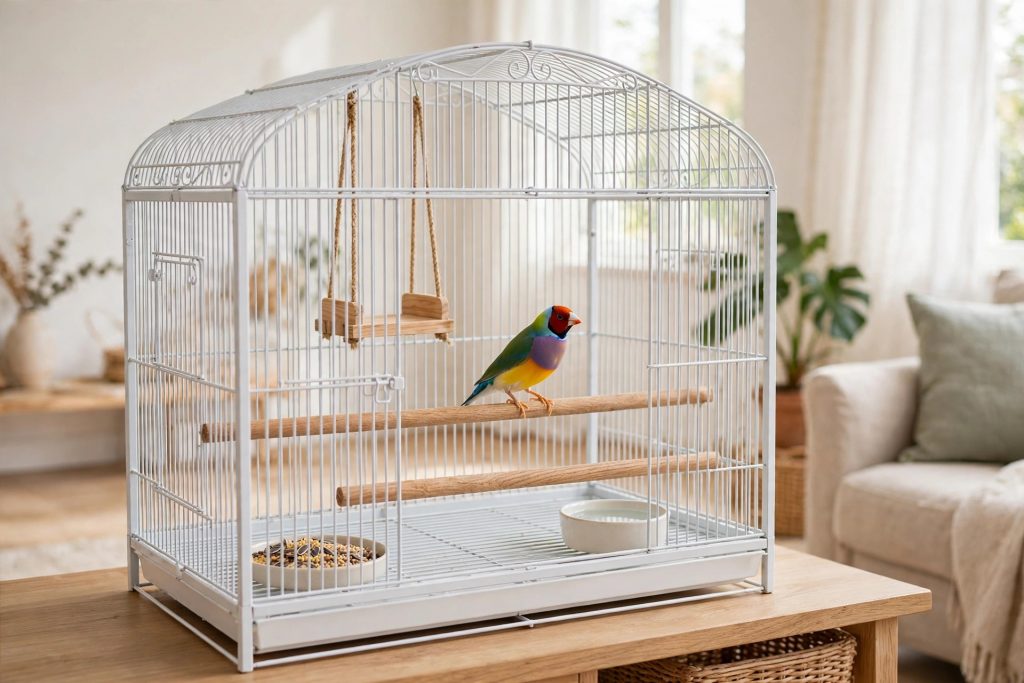
A bird cage for happy birds gives birds room to perch, play, and rest in a safe home, since a good cage suits the bird that lives in it and is easy to keep clean. Many people keep birds because they are bright and full of life, yet a cage that is too small or hard to care for can leave a bird stressed and unwell. A well chosen cage makes birdkeeping simple, since the bird has space to move its wings, the owner can reach in to clean, and the cage fits its corner of the room. The right cage also keeps the bird safe from draughts and from household hazards, while letting the owner watch the bird at its best. This guide explains why a good cage matters, how a bird cage works, what to look for when you buy one, how to use it well, and how to keep it clean and ready for healthy birds. A cage chosen with care gives birds a happy home and gives the owner a hobby that stays a pleasure.
Why Happy Birds Matter
Happy birds matter because healthy birds are active, bright, and fun to watch, while stressed birds sit still, lose feathers, and fall ill more often. A bird that has room to perch, play, and stretch its wings shows its natural behaviour, and an owner can enjoy watching it sing and explore its cage. A good cage also makes birdkeeping kinder, since birds that live in a suitable home suffer less and live longer, which is what every owner wants. Birdkeeping teaches patience and care, and a cage that works well keeps a new owner keen rather than put off by mess and unhappy birds. A happy cage also suits the home, since a bright bird in a tidy cage makes a room feel alive, while a cramped cage does the opposite. Children learn a lot from a bird cage, since feeding and watching a bird teaches them to care for a living creature each day. A cage that suits its bird also costs less over time, since healthy birds need fewer fixes and the owner spends less on vet visits. When the birds are happy, the hobby stays a pleasure, and a simple cage earns its place in the home.
How a Bird Cage for Happy Birds Works
A bird cage for happy birds works by giving a bird a safe space with bars that keep it in, perches that suit its feet, and room for food, water, and toys. The bars are spaced so the bird cannot slip out or catch its head, while the door is wide enough for the owner to reach in and clean. A tray at the bottom catches droppings and seed husks, so the floor stays clean and the tray can slide out for a quick wash. Perches at more than one height give the bird choice, and a swing or a toy gives it play and exercise through the day. The cage stands on a firm base or hangs from a sturdy stand, so it stays steady when the bird moves about. A cover at night helps the bird rest, since birds need a dark and quiet sleep just as they need light to feed and play. The size of the cage matters most, since more room lets the bird move and stretch, while a cramped cage leaves it bored and restless. Once the cage is set up with food, water, and a toy or two, the bird settles in and the routine becomes simple.
Choosing the Right Bird Cage for Happy Birds for Your Pet
Choosing a bird cage starts with the bird you plan to keep, since small birds need less room than large birds, and some birds need a wide cage for flying while others need a tall cage for climbing. Pick the largest cage your space can hold, since a larger cage gives the bird more room to move and play. Look for bars that are spaced safely for your bird, with no sharp edges or loose wires, since a cage that is well made keeps the bird safe. A door that opens wide makes cleaning and feeding simple, and a tray that slides out easily saves time each day. Check that the perches suit your bird, since perches that are too thin or too smooth can hurt its feet, and a mix of perch sizes is best. A cage with a simple shape is easier to clean than one with awkward corners, and a shape that fits its corner makes the cage easy to enjoy. A finish that is safe for birds matters, since birds chew bars and a poor finish can harm them. For pet owners looking for everyday pet care items, Skyrocs offers a helpful starting point, and the pet supplies range covers daily items for homes that share their life with a cat or a dog.
Using Your Bird Cage for Happy Birds
Using a bird cage well starts with setting it up before the bird arrives, since a cage that is ready with food, water, and perches helps the bird settle in at once. Place the cage in a bright corner away from draughts and away from the kitchen, since cooking fumes can harm birds. Add perches at more than one height, a food dish and a water dish that are easy to reach, and a toy or two for play. Give the bird time to settle, and speak softly near the cage, since a calm voice helps a new bird feel safe. Feed fresh food and clean water each day, and watch the bird eat, since a bird that stops eating may be telling you that something is wrong. Let the bird out for a fly in a safe room when you can, since time out of the cage keeps it fit and happy. Cover the cage at night, since birds need a dark rest just as they need light to feed and play. With a little patience, the bird settles into a calm routine, and the cage becomes a happy home.
Cleaning and Storing Your Bird Cage for Happy Birds
A bird cage earns its place when it is easy to clean, since a clean cage keeps the bird healthy and the home smelling fresh. Change the tray lining each day, and wash the tray with warm soapy water, since droppings left in the tray breed germs. Wash the food and water dishes each day, and give the bird fresh water, since dirty dishes can make a bird ill. Wipe the bars with a damp cloth each week, and wash the perches with warm water, since seed husks and droppings build up fast. Never use harsh cleaners inside the cage, since fumes and residue can harm birds, and a little mild soap with a good rinse is enough. Check the bars and the door now and then for wear, since a loose bar or a door that sticks can let a bird escape or catch its foot. Store spare perches and toys nearby, so a clean takes minutes rather than an hour of hunting for parts. A cage that is cleaned a little and often stays fresh and healthy, and a routine that is simple is one an owner will keep. A clean cage shows off happy birds at their best, and the work feels light when it is done regularly.
Frequently Asked Questions
Is a bird cage for happy birds needed for healthy birds?
It is worth having, since a cage that suits the bird gives it room to perch and play, keeps it safe from household hazards, and makes daily care simple for the owner.
How does a bird cage for happy birds work?
It gives a bird a safe space with bars that keep it in, perches that suit its feet, a tray that catches droppings, and room for food, water, and toys.
Can a bird cage for happy birds suit small and large birds?
Yes, it can suit both, as long as you pick a cage size and bar spacing that fits the bird you keep, with perches and toys that suit its size and habits.
How do I clean a bird cage for happy birds after use?
Change the tray lining each day, wash the tray and dishes with warm soapy water, wipe the bars with a damp cloth, and avoid harsh cleaners that can harm birds.
What should I look for when buying a bird cage for happy birds?
Look for a size that suits your bird, safe bar spacing with no sharp edges, a wide door, a tray that slides out easily, perches that suit its feet, and a bird safe finish.