
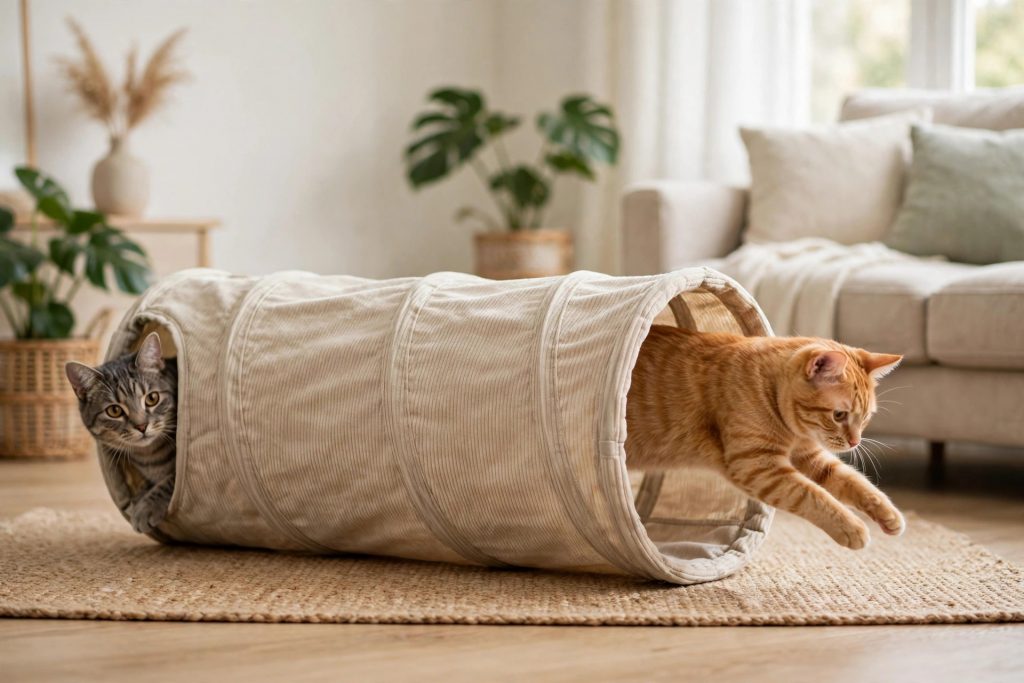
A cat tunnel for playful hiding brings shelter, chase, and fun into daily play, and a cat that sees a tunnel across the room often dives inside, peeks out, and pounces with delight.
Play is how a cat stays fit and sharp, and a toy that offers hiding turns a quiet afternoon into a game that holds attention for a long while.
Many owners keep a tunnel in a corner of the living room, and it is often the first place a cat runs to when playtime starts in the evening.
The right tunnel suits the cat that plays with it, with a width that fits the body, a length that invites a dash through, and a build that stands up to happy pouncing.
This guide explains why tunnel play matters for cats, how a cat tunnel for playful hiding works, what to look for when you buy one, how to use it well, and how to clean and store it so it stays ready for daily play. You can also visit Skyrocs to explore pet toys for your home.
Why Tunnel Play Matters for Cats
Tunnel play matters for cats because a cat needs daily play to stay lean, supple, and calm, and a toy that invites hiding helps a cat move more through the day.
Hiding adds excitement to play, since a tunnel gives a cat a safe den to watch from and a secret path to dash through and pounce from.
A cat that hides and pounces feels proud and satisfied, and that sense of success builds confidence and keeps a shy cat more open to play.
Play also builds trust between a cat and its owner, since shared games teach the cat that people bring fun and that gentle play leads to more play.
A tunnel can keep a cat busy while its owner sits nearby, and that quiet play helps a cat that lives indoors stay active without going outside.
Cats that lack play often scratch furniture and climb curtains, and a toy that holds attention gives that restless energy a safe outlet.
A home with a happy cat feels warm and lively, and a simple tunnel is a small part of that daily joy.
How a Cat Tunnel for Playful Hiding Works
A cat tunnel for playful hiding works because a soft tube with springy rings holds its shape open, and the cat can run through it, hide inside it, and peek out from either end.
The tube is usually made from soft fabric over a light frame, so it stays open for play and folds flat for storage when the game ends.
Some tunnels carry a crinkly layer inside, so each step through the tube makes a rustling sound that wakes the hunting instinct and draws the cat back inside.
The openings are wide enough for a cat to dash through at speed, so a cat can chase a toy through the tunnel and burst out the far end in triumph.
A well made tunnel keeps its rings firm and its fabric taut, so the tube stays open through daily play and keeps working rather than sagging shut.
When the design is right, the tunnel almost disappears into the game, and the cat can focus on play instead of fighting with a toy that collapses too soon.
Choosing the Right Cat Tunnel for Your Pet
Choosing the right cat tunnel for your pet starts with width, since a tunnel that is too narrow crowds the body and a tunnel that is too wide feels less like a den.
Look for soft fabric and a clean finish, since a well made tunnel feels smooth in the hand and shows no rough seams, loose parts, or sharp rings.
A single straight tunnel suits cats that love a fast dash through, while a tunnel with a bend or a side opening suits cats that love to hide and pounce.
Check that the tunnel folds flat before you buy when you can, since a tunnel that folds well is easy to store and easy to carry to another room.
Think about where play happens, since a long tunnel suits open rooms and a shorter tunnel suits small flats where space is tight.
A tunnel that fits the cat and suits the home turns play into a daily pleasure, and a careful choice at the shop saves trouble later on.
Using Your Cat Tunnel for Playful Hiding
Using your cat tunnel for playful hiding well starts with short play sessions, since a young cat tires quickly and a short game leaves the cat keen for the next one.
Place the tunnel in an open spot with room at both ends, and let the cat explore it, sniff it, and walk through it at its own pace.
Toss a small toy through the tunnel, and let the cat chase it, dive in after it, and burst out the far end with the toy in tow.
Let the cat hide inside often, since a game that lets the cat watch from hiding and pounce out keeps the cat eager to play again.
Keep the tunnel in one place during play, since a tunnel that slides across the floor can startle a cat, and a rug underneath gives good grip.
Play on a safe surface with room to move, since a cat that leaps and twists needs space to land well and a clear floor gives good grip.
A calm end to play matters as well, since a cat that settles with a quiet rest after a game learns that excitement ends in calm, and that lesson lasts.
Cleaning and Storing Your Cat Tunnel for Playful Hiding
Cleaning and storing your cat tunnel for playful hiding keeps the tunnel safe and fresh, since a tunnel that a cat runs through picks up fur, dirt, and dust from the floor.
Wipe the fabric with a damp cloth and mild soap, then let the tunnel dry fully in fresh air before the next game.
Check the tunnel each time you clean it, since a ring that bends or fabric that tears shows that the tunnel needs repair or a rest from play.
Fold the tunnel flat after play and store it behind a sofa or in a cupboard, since a folded tunnel takes little space and stays ready for the next game.
Keep tunnels away from damp corners and direct heat, since damp can bring a musty smell and heat can warp the rings or fade bright colours.
Throw away a tunnel that is torn or sagging, since a damaged tunnel can collapse on a cat or shed small parts during play.
A clean tunnel in a tidy home is ready whenever playtime comes, and a home that cares for its pet toys keeps play safe day after day. Homes that share their rooms with a cat or a dog can browse the pet supplies range for more pet essentials.
Frequently Asked Questions
Is a cat tunnel for playful hiding safe for a young cat?
A cat tunnel for playful hiding is safe when it fits the cat and suits the way the cat plays, so choose a width that fits the body, check the rings and fabric for wear, place it on a rug so it stays put, and replace it when it sags or tears.
How does a cat tunnel for playful hiding keep a cat busy?
A cat tunnel for playful hiding keeps a cat busy because the tube gives a den to hide in and a path to dash through, and that hiding and chasing wakes the hunting instinct and gives restless energy a safe outlet.
Can a cat tunnel for playful hiding suit a shy cat?
A cat tunnel for playful hiding can suit a shy cat when the tunnel sits in a quiet corner and the cat can explore it at its own pace, so place it somewhere calm, let the cat sniff and enter freely, and never force the cat inside.
How do I clean a cat tunnel for playful hiding after play?
Clean a cat tunnel for playful hiding by wiping the fabric with a damp cloth and mild soap, drying it fully in fresh air, checking the rings and seams for wear, and folding it flat for storage until the next game.
What should I look for when buying a cat tunnel for playful hiding?
Look for a width that fits the cat, soft fabric with no rough seams, firm rings that hold the tube open, a length that suits the room, and a build that folds flat for storage, so the tunnel lasts well and keeps the cat happy.