
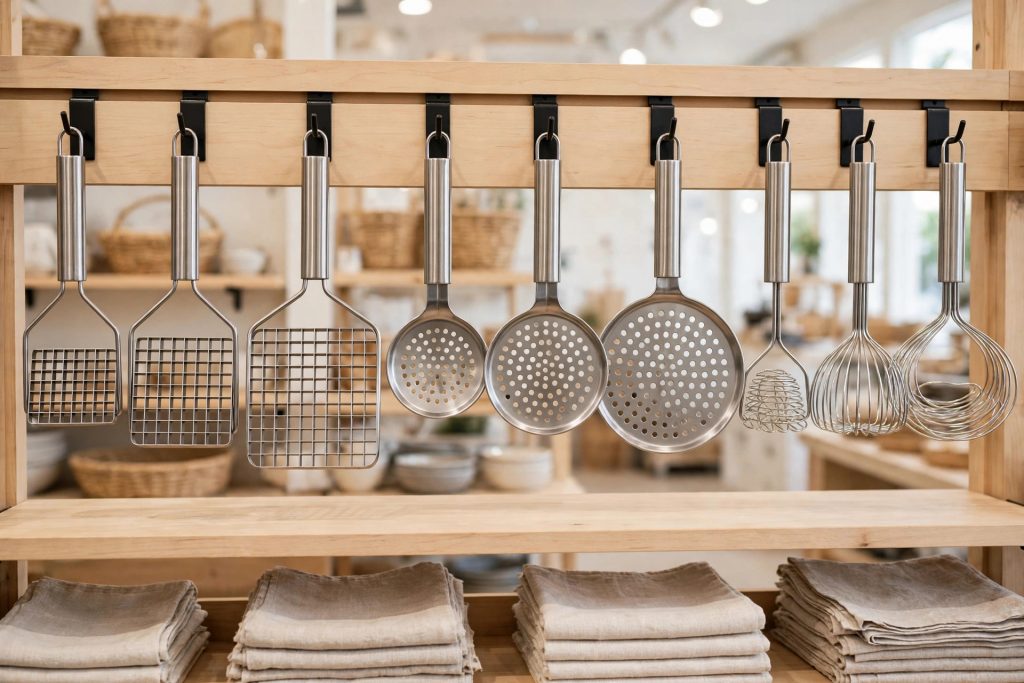
Wholesale potato mashers suppliers help a kitchen shop stock potato mashers that home cooks trust, so shelves stay full of tools that sell steadily through the year. Mash is a weekly dish in many homes, and a masher that presses smoothly is a tool cooks seek out. This guide explains why potato mashers sell well, what a good range covers, how to choose a supplier, how to price and order, and how to display stock so it moves. A shop that stocks the right mashers in the right styles will see steady sales, and a little care in choosing a supplier keeps the range fresh.
Why Wholesale Potato Mashers Sell Well
Wholesale potato mashers sell well because mash is served in homes every week, and a masher that leaves lumps is a common frustration. Cooks who have fought lumps with a fork look for a masher that presses evenly. A masher that gives smooth mash is an easy buy once the cook sees the head. Demand like this, driven by a real kitchen frustration, makes mashers steady sellers.
Mashers sell well because they suit many buyers, from new cooks setting up a first kitchen to experienced cooks replacing a bent wire head. The price is modest, so buyers add a masher to a basket without much thought, and the use is clear at a glance. A shop can sell mashers beside pots, peelers and cooking tools, since each of those buyers may need one. Clear use plus modest price makes for easy sales.
Potato mashers also sell as gifts and starter pieces, since a kitchen set feels incomplete without a tool for mash. A new home gift that includes a masher, a peeler and a ladle feels thoughtful and complete. Shops that bundle mashers into starter sets lift the sale and help new cooks set up well. With everyday demand and gift sales, mashers earn their shelf space.
What a Good Wholesale Range Covers
A good wholesale range covers several head shapes, since creamy mash and fluffy mash need different heads. A grid or plate head with small holes suits creamy mash, while a wire head suits light fluffy mash. Stocking both lets the shop serve different tastes from the same shelf. A range that covers grid, plate and wire sells more than one head alone.
A range that offers both lets the shop serve different kitchens and habits. Stainless steel suits most buyers, while a light option suits buyers who want easy handling. Variety in handles and materials broadens the shelf without confusing it.
A mid head suits most pots, and a shop that stocks mid and large gives buyers a real choice. Size detail on the shelf helps buyers pick without asking staff for every piece. Choice of size turns a glance into a sale.
Choosing a Supplier You Can Trust
Choosing a supplier you can trust starts with the quality of the head, so inspect samples before you place a large order. A supplier that sends honest samples and welcomes checks is one worth keeping. Head quality that you have felt with your own hands is easier to sell than a promise on a page.
Reliable delivery matters as much as quality, since a shop cannot sell stock that has not arrived. Ask how long orders take, how bent heads are handled, and what happens if a delivery arrives damaged. A supplier with clear packing, steady lead times and a fair damage policy protects the shop from empty shelves and lost sales. Skyrocs is one place where a shop can start looking at a steady wholesale offer, and the range there gives a useful point of comparison when weighing suppliers.
Clear terms build trust, so read the order minimums, payment terms and return rules before you commit. A supplier that states terms plainly and answers questions quickly is easier to work with than one that hides detail. Check whether small top up orders are allowed, since mashers sell steadily and a shop needs to restock without ordering a full case each time. Fair terms keep the relationship smooth when sales rise or dip.
Pricing and Ordering for Your Shop
Pricing potato mashers starts with knowing the full landed cost, so add freight and handling to the unit price before setting a shelf price. Mashers are light, yet packing and freight still add up across a case, so count them honestly. Work out the margin on each head shape and material, since wire heads may cost less to make than plate heads. A clear cost picture keeps prices fair to buyers and healthy for the shop.
Set prices that reflect the piece, since a heavy steel masher with a firm handle is not the same buy as a light plain one. Price the range in clear steps, so buyers can see the move from everyday to sturdier quality without confusion. Avoid pricing so low that the shop cannot cover damage, and avoid pricing so high that buyers walk past. A tidy price ladder helps staff guide buyers and helps the shop hold margin.
Order in line with demand, starting with the head shapes that sell fastest and adding slower lines in smaller numbers. Keep a close eye on which heads move, since creamy mash lovers and fluffy mash lovers do not buy the same pieces. Order ahead of holiday meals and roast seasons, when mash cooking and gift buying rise together. A shop that orders early avoids empty shelves at the moment buyers want mashers most. The wholesale range can serve as a reference when planning the next order.
Displaying Wholesale Potato Mashers to Sell More
Displaying potato mashers to sell more starts with hanging them where buyers can see the head and lift the piece. A hook display lets buyers feel the weight, check the head and see the grip up close. Hang grid, plate and wire heads side by side, so buyers can compare at a glance. A display that invites touch sells better than a shelf that only invites a glance.
Group mashers with peelers, pots and cooking tools, so buyers see the job each masher serves. A small dressed shelf with a masher beside a peeler shows the buyer how mash starts at home. Buyers who came for a peeler may add a masher when they see it beside the peeler they need. Grouped displays turn one buy into two.
Use simple signs that state head shape and use in plain words, so buyers can compare without asking staff for every detail. A sign that says grid heads suit creamy mash while wire heads suit fluffy mash helps buyers picture the job at home. Keep signs short and honest, and let the masher itself do most of the talking. Clear signs speed up choice and free staff to help buyers who need guidance.
Frequently Asked Questions
How do wholesale potato mashers suppliers help a kitchen shop?
Wholesale potato mashers suppliers help a kitchen shop by offering a range of head shapes, handle styles and prices in one place, so the shop can stock a full shelf without chasing many makers. They also give steady supply, clear terms and samples to check, which keeps shelves full and quality steady.
What should wholesale potato mashers suppliers offer in a range?
Wholesale potato mashers suppliers should offer grid, plate and wire heads, a choice of handles, several sizes and a spread of prices. A good range also includes firm handles that give steady pressing, so buyers get smooth mash and long life.
How do I choose among wholesale potato mashers suppliers?
To choose among wholesale potato mashers suppliers, inspect samples for an even head, firmly fixed wires or grids and a firm handle, then check delivery times, damage cover and order terms. A supplier with clear terms, honest detail and quick answers is easier to work with.
What should a shop order first from wholesale potato mashers suppliers?
A shop should order first the head shapes that sell fastest, usually a grid head in a mid size with a few wire heads for fluffy mash. Add a large head for big pots to cover roast dinners, and keep the first order modest until sales show which lines move.
Where should a shop display stock from wholesale potato mashers suppliers?
A shop should display stock from wholesale potato mashers suppliers hung on hooks where buyers can see the head and lift the piece, grouped with peelers and pots so buyers see the job. Put best sellers at eye level, use short honest signs, and rotate fresh head shapes to the front.