
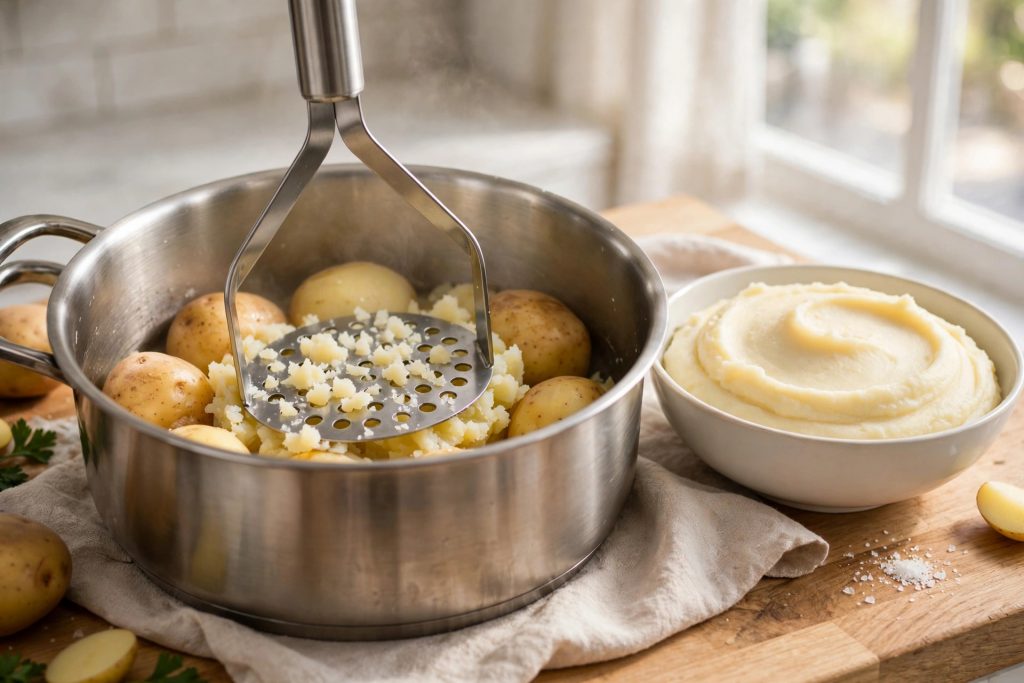
A potato masher for smooth mashing presses cooked potatoes into soft even mash without lumps, so mash arrives creamy and light. Potatoes that are mashed well feel smooth on the tongue and hold butter and milk evenly, while lumpy mash feels rough and unfinished. A good masher presses firmly, reaches the corners of the pot and leaves no hard bits behind. This guide explains why smooth mashing matters, how a masher works, what to look for when you buy one, how to use it well, and how to clean and store it so it stays ready.
Why Smooth Mashing Matters
Smooth mashing matters because texture shapes how mash feels, and a creamy mash tastes better than a lumpy one. Lumps in mash catch on the tongue and hold dry centres that never took in butter or milk. A masher that presses evenly leaves mash soft through and through, so each spoonful tastes rich and smooth. Small care at this step lifts the whole plate.
Mashing well also protects flavour, since smooth mash takes in butter, milk and seasoning evenly. Lumpy mash hides dry pockets that taste plain, while smooth mash carries flavour in every bite. A masher that works the whole pot gives mash that tastes as good as it looks. Even mixing is what turns plain potatoes into a dish worth serving.
A good masher saves effort, since mashing by fork or spoon takes longer and leaves more lumps behind. A masher with a firm grip and a wide head presses a full pot in a few minutes, and the cook can serve while the mash is still hot. Less effort means mash gets made more often and served fresher. A simple tool that saves time earns its place in the kitchen.
How a Potato Masher for Smooth Mashing Works
A potato masher for smooth mashing works by pressing cooked potatoes through a flat head that breaks them into soft even pieces. The head may be a grid, a plate with holes or a wavy wire, and each shape presses the potato in a slightly different way. A grid head cuts the potato into small pieces as it presses, while a plate head pushes it through holes for a finer mash. The cook presses down and lifts, and the mash grows smoother with each pass.
The handle gives the force, since a firm grip lets the cook press down with steady weight. A long handle suits deep pots, while a short handle suits shallow pans and small batches. A handle that fits the hand lets the cook press without slipping, and a slight curve can help the wrist stay comfortable. A well shaped handle turns pressing into easy work.
The head shape decides how smooth the mash turns out, since a head with many small holes makes finer mash than one with a few large ones. A wire head suits light fluffy mash, while a solid plate suits dense creamy mash. Some heads are flat, which suits pressing across the pot base, while others are rounded to reach into corners. Choosing the head for the mash you like is the heart of smooth mashing. Home cooks can browse Skyrocs for kitchen tools that suit everyday meals.
Choosing the Right Potato Masher for Your Kitchen
Choosing the right potato masher for your kitchen starts with head shape, since the head decides how smooth the mash turns out. A grid or plate head with small holes suits creamy mash, while a wire head suits light fluffy mash. A flat head presses well across the pot base, while a rounded head reaches into corners. Match the head to the mash your household likes best.
Handle comfort shapes use as well, since mashing needs steady pressing and a handle that slips makes the job harder. A handle with a firm grip suits wet hands, while a long handle suits deep pots and keeps hands clear of steam. A handle that feels solid and balanced lets the cook press with confidence. Hold the masher before you buy, and choose one that feels firm in your grip.
Material shapes care and life, so weigh steel against other choices before you buy. Stainless steel mashers are strong, easy to clean and suit hot potatoes, which makes them the common choice for everyday kitchens. Plastic mashers are light and cheap, though they can bend under firm pressure and may stain. A steel masher with a firm handle will outlast a flimsy one, and a masher that feels solid in hand will serve longer. Homes that share their kitchen with a cat or a dog can also browse the pet supplies range for everyday pet care needs.
Using Your Potato Masher for Smooth Mashing
Using your potato masher for smooth mashing starts with cooking the potatoes until they are fully soft, since a masher cannot fix undercooked potatoes. Drain the pot well, then return it to low heat for a moment to dry the potatoes. Add warm butter and milk, then press with the masher in slow steady strokes. Hot soft potatoes and warm additions are the base of smooth mash.
Press with even strokes across the pot, lifting and pressing again so every part of the batch is worked. Reach into the corners and along the edges, where lumps often hide, and press those spots twice. Avoid overworking the mash, since too much pressing can turn potatoes gluey rather than smooth. A few calm passes give creamy mash, while endless pressing spoils it.
Add milk a little at a time, since too much liquid at once makes mash runny and hard to fix. Press the milk in with each addition, and taste as you go so seasoning stays balanced. A masher that mixes as it presses spreads butter and milk evenly through the batch. Steady additions and even pressing keep the texture just right.
Cleaning and Storing Your Potato Masher for Smooth Mashing
Cleaning your potato masher for smooth mashing is easiest right after use, before mash dries onto the head. Rinse it under warm water, then wash with mild soap and a soft cloth or sponge. Pay attention to the holes and wires, where mash can hide, and brush them gently if needed. Quick cleaning keeps the head open and the mash smooth.
Dried mash in a head needs soaking, so leave the masher in warm soapy water until the bits soften, then brush them away. Avoid hard scraping that can bend wires or scratch steel, and avoid forcing the head against a hard surface. A soak and a soft brush will clear most residue without damage. Patience in cleaning protects the head that does the work.
Dry the masher fully before it is stored, since a damp head can smell stale and can spot over time. Wipe the head and handle with a soft cloth, then leave it to air dry for a while. A dry masher stores clean and feels fresh when it is next taken out. Hanging the masher by its handle keeps the head clear of other tools.
Frequently Asked Questions
Is a potato masher for smooth mashing needed for home cooking?
A potato masher for smooth mashing is needed in any kitchen that serves mash often and wants it creamy without lumps. Its wide head presses the whole pot evenly, which a fork cannot do.
How does a potato masher for smooth mashing work?
A potato masher for smooth mashing works by pressing cooked potatoes through a flat head that breaks them into soft even pieces. A grid or plate head presses the potato through small holes, while a wire head gives a light fluffy mash.
What head shape should a potato masher for smooth mashing have?
The head shape a potato masher for smooth mashing should have depends on the mash you like best. A grid or plate head with small holes suits creamy mash, while a wire head suits light fluffy mash.
Can a potato masher for smooth mashing handle other foods?
A potato masher for smooth mashing can handle other soft foods such as cooked carrots, sweet potatoes and beans, since the same pressing action breaks them down evenly. It suits any soft cooked food that needs a smooth texture, though hard raw foods may resist the head.
What should I look for when buying a potato masher for smooth mashing?
When buying a potato masher for smooth mashing, look for a head shape that matches your mash, a handle that feels firm and balanced, a size that fits your pots, and steel that washes easily.