
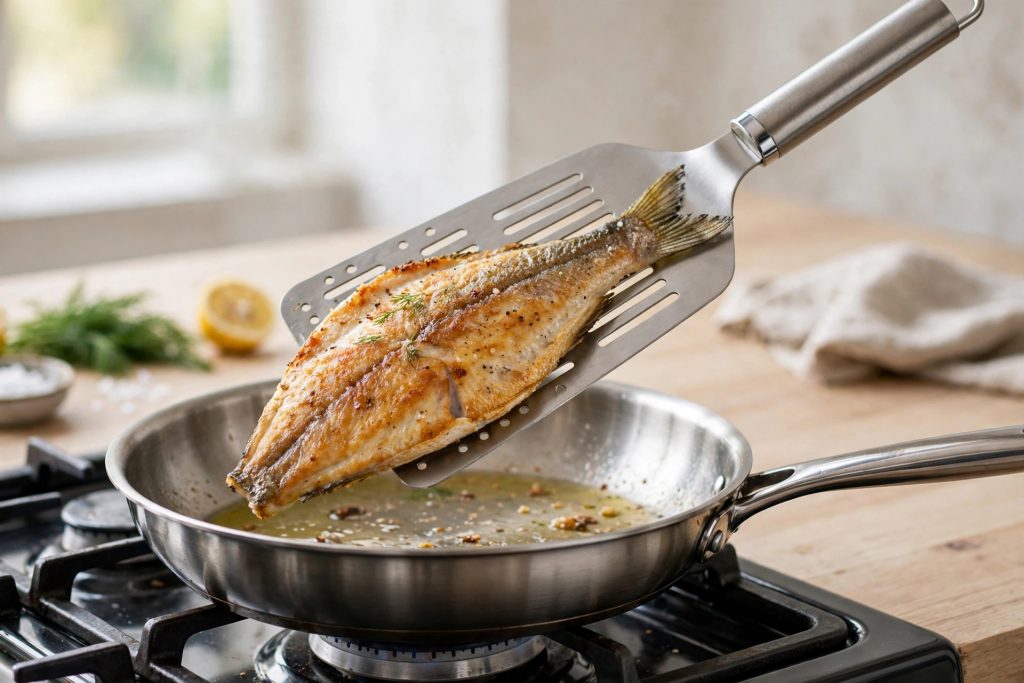
A fish turner for easy flipping slides under delicate fillets and lifts them whole, so fish reaches the plate intact instead of breaking in the pan. Fish is tender and falls apart easily, and a wide flat turner supports the whole fillet while it turns. Many cooks break fish with a narrow spatula, yet the right turner makes flipping calm and simple. This guide explains why easy flipping matters, how a turner works, what to look for when you buy one, how to use it well, and how to clean and store it so it stays ready.
Why Easy Flipping Matters
Easy flipping matters because fish is delicate, and a fillet that breaks in the pan loses its looks and its texture. A whole fillet serves neatly and holds its juices, while broken pieces dry out and look careless on the plate. A turner that supports the full fillet keeps the fish intact from pan to plate. One calm flip is the difference between a neat meal and a messy one.
Flipping well also protects flavour, since fish that stays whole cooks evenly and keeps its moist centre. Broken pieces cook too fast at the edges and lose moisture where they tear. A turner that lifts cleanly lets the cook turn the fish once and leave it alone, which is how fish cooks best. Less handling means better fish.
A good turner builds confidence, since many cooks fear flipping fish and leave it too long on one side. A wide flat blade that slides under the fillet with ease takes that fear away, and the cook can turn the fish at the right moment. Confidence in the pan leads to better timing and better meals. A simple tool can change how often a household cooks fish.
How a Fish Turner for Easy Flipping Works
A fish turner for easy flipping works with a wide thin blade that slides under a fillet and supports it across its full width. The blade is wider than a normal spatula, so the fish rests on a flat surface rather than balancing on a narrow edge. A slight flex in the blade helps it slip under fish without tearing the flesh. The cook slides, lifts and turns in one smooth motion, and the fillet stays whole.
The edge of the blade matters, since a thin tapered edge slips under fish that has stuck lightly to the pan. A thick blunt edge pushes the fish and tears it, while a thin edge glides beneath with little force. Some blades carry slots that let oil drain away as the fish is lifted, so the fillet does not carry excess fat to the plate. A thin slotted blade is the heart of easy flipping.
The handle gives control, since a long handle keeps hands clear of heat while a firm grip stops the turner twisting mid flip. Balance matters too, since a turner that feels heavy at the blade is hard to guide. A well balanced turner feels like part of the hand. Home cooks can browse Skyrocs for kitchen tools that suit everyday meals.
Choosing the Right Fish Turner for Your Kitchen
Choosing the right fish turner for your kitchen starts with blade width, since the blade should match the fillets you cook most. A wide blade suits large fillets and whole fish, while a mid width suits everyday portions. A blade that is narrower than the fillet leaves the edges unsupported and the fish can fold or break. Measure your usual fillets, then choose a blade that covers them fully.
Blade material shapes use and care, so weigh steel against other choices before you buy. Stainless steel blades are thin, strong and easy to clean, which makes them the common choice for fish. Silicone coated blades suit non stick pans and protect the coating, though they may be thicker at the edge. A steel blade with a smooth finish slides well and washes easily, and it suits most pans.
Slots in the blade help oil drain as fish is lifted, so look for slots that are wide enough to drain yet narrow enough to support the fillet. A slotted blade keeps the plate free of excess oil and keeps fried fish crisp. Solid blades suit steamed or sauced fish where draining matters less. Choose slots when you fry fish often, and a solid blade when you serve fish in sauce. Homes that share their kitchen with a cat or a dog can also browse the pet supplies range for everyday pet care needs.
Using Your Fish Turner for Easy Flipping
Using your fish turner for easy flipping starts with letting the fish cook until it releases from the pan on its own. Give the fillet time to set on the first side, and test the edge gently with the blade before lifting. When the fish moves freely, slide the blade fully under the fillet so the whole piece rests on the blade. A patient start is the key to a clean flip.
Lift with a smooth steady motion, keeping the blade flat so the fillet does not slide off or fold. Turn the wrist in one calm move, and set the fish down gently on its second side. Avoid flipping twice, since each extra turn risks breaking the fillet and drying the flesh. One confident flip gives the best result, so commit to the motion and let the blade do the work.
Use the turner to serve as well as to flip, since the wide blade carries the fillet from pan to plate without extra handling. Slide under the cooked fish, lift it clear of the pan, let oil drain through the slots, and set it down gently. A turner that serves as well as flips keeps the fish whole to the very end. Less handling means a neater plate.
Cleaning and Storing Your Fish Turner for Easy Flipping
Cleaning your fish turner for easy flipping is easiest right after use, before fish oils dry onto the blade. Rinse it under warm water, then wash with mild soap and a soft cloth or sponge. Pay attention to the slots, where oil and crumbs can hide, and brush them gently if needed. Quick cleaning keeps the blade smooth and ready for the next meal.
Dried fish on a blade needs soaking, so leave the turner in warm soapy water until the bits soften, then wipe them away. Avoid harsh pads that can scratch steel or wear a coated blade, and avoid bending the blade to scrape off stuck food. A soak and a soft cloth will clear most residue without damage. Gentle cleaning protects the thin edge that slides under fish.
Dry the turner fully before it is stored, since a damp blade can spot and a damp handle can smell stale. Wipe the blade and handle with a soft cloth, then leave it to air dry for a while. A dry turner stores clean and feels fresh when it is next taken out. Hanging the turner by its handle keeps the blade clear of other tools.
Frequently Asked Questions
Is a fish turner for easy flipping needed for home cooking?
A fish turner for easy flipping is needed in any kitchen that cooks fish often and wants fillets to reach the plate whole. Its wide blade supports the full fillet, which a narrow spatula cannot do.
How does a fish turner for easy flipping work?
A fish turner for easy flipping works with a wide thin blade that slides under a fillet and supports it across its full width. A tapered edge slips under fish without tearing, slots let oil drain, and a firm handle gives control through the turn.
Can a fish turner for easy flipping handle whole fish?
A fish turner for easy flipping can handle whole fish when the blade is wide enough to support the fish across its body. A large blade suits whole fish and large fillets, while a mid width suits everyday portions.
Can a fish turner for easy flipping be used on non stick pans?
A fish turner for easy flipping can be used on non stick pans when the blade is coated or made from a pan safe material that will not scratch the coating. A bare steel blade can mark non stick surfaces, so check the guidance from the maker before using it there.
What should I look for when buying a fish turner for easy flipping?
When buying a fish turner for easy flipping, look for a blade wide enough to support your fillets, a thin tapered edge that slides under fish, slots that drain oil, and a handle that feels firm and balanced.