
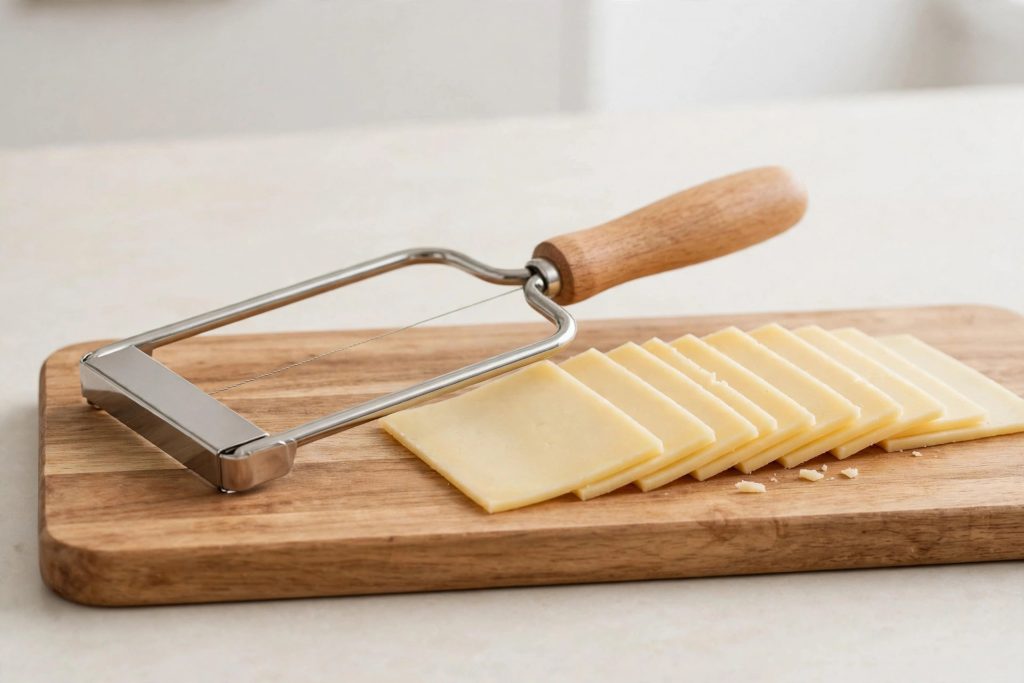
A cheese slicer for thin slices makes everyday kitchen work easier, since it handles cheese with far less fuss than a slow tool that fights the job at every step.
Many cooks lose time on small tasks that add up across a busy day, and a tool that works smoothly from the first use earns its place on the bench.
The right cheese slicer suits the job it was made for, with stainless steel wire and a smooth handle, so the work feels easy and the result looks neat.
This guide explains why thin slices matter in the kitchen, how a cheese slicer for thin slices works, what to look for when you buy one, how to use it well, and how to clean and store it so it stays ready for daily use.
A cheese slicer that fits the hand and suits the task turns a chore into a quick job, and a home that keeps such tools close at hand cooks with less fuss and more pleasure.
Read on for practical advice that helps you choose well, use the tool with care, and keep it in good shape for a long time. You can also visit Skyrocs to explore kitchen tools for your home.
Why Thin Slices Matter
Good thin slices matter in the kitchen because a meal has many small steps, and a weak tool at any step holds up everything that follows.
A cheese slicer that works well saves a few moments at each use, and those moments add up across a week of cooking into time that can go to the meal itself.
A good tool also keeps a cook in a good rhythm, since there is no pause to wrestle with a clumsy part while food waits on the bench.
When a job feels easy, it gets done properly, and a tool that makes the work feel light helps a home cook keep good habits every day.
Homes with busy evenings gain the most from a cheese slicer that works well, since dinner has to reach the table on time and no one wants to spend the evening on prep.
A tool that saves time also saves patience, and a calm cook makes better meals than a cook who is tired before the food is even served.
Ease is not about rushing, since a good cheese slicer lets a cook work at a steady pace without forcing the tool or the food.
A kitchen that runs smoothly feels pleasant to work in, and a reliable tool is a small part of that calm.
How a Cheese Slicer for Thin Slices Works
A cheese slicer for thin slices works because its design matches the job, with stainless steel wire and a smooth handle that suit the cheese it handles.
The sturdy build keeps the tool strong through daily use, and a well made tool holds its shape rather than wearing out with time.
Good design also means the tool feels balanced in the hand, so the cook can guide it without strain or awkward grip.
The parts work together in a simple way, so there is little to learn and little that can go wrong during a busy meal.
A cheese slicer made for firm cheese, semi firm cheese, and soft cheese that holds its shape gives an even result each time, which matters when the food reaches the table.
Simple tools often last the longest, since fewer moving parts mean fewer places where wear can show up.
The shape of the tool suits the hand and the bench, so it sits well in storage and comes out ready to use.
When the design is right, the tool almost disappears into the task, and the cook can focus on flavour and timing instead.
Choosing the Right Cheese Slicer for Your Kitchen
Choosing the right cheese slicer starts with size, since a tool that is too large crowds the bench and a tool that is too small slows the work down.
Look for solid materials and a clean finish, since a well made tool feels firm in the hand and shows no rough edges or loose parts.
Weight matters as well, since a tool that is too heavy tires the hand and a tool that is too light can feel flimsy during use.
Check that the tool suits firm cheese, semi firm cheese, and soft cheese that holds its shape, since a good match makes the work faster and the result more even.
A cheese slicer with stainless steel wire and a smooth handle suits most homes, and it should feel comfortable to hold for the length of a normal meal prep.
Storage space counts too, since a tool that fits the cupboard or the drawer gets used far more often than one that lives out of reach.
Read the shape and the grip before you buy, since a handle that suits your hand makes every use easier and safer.
Buy the best quality you can afford, since a good cheese slicer lasts for years and a cheap one often needs replacing far too soon.
Using Your Cheese Slicer for Thin Slices
Using a cheese slicer for thin slices well starts with setting up a clear space on the bench, so the tool and the cheese both sit steady while you work.
Work at a calm pace and let the tool do the work, since forcing it can spoil the result and tire the hand.
Keep the cheese in place with a steady grip, and guide the tool in smooth even strokes for the best result.
A cheese slicer works best for firm cheese, semi firm cheese, and soft cheese that holds its shape, so match the tool to the task and do not ask it to do work it was not made for.
Clean as you go when you can, since a tidy bench makes the next step faster and keeps the tool ready for its next use.
Serve or store the cheese straight after use, so it reaches a cheese board, a sandwich, or a snack plate fresh and looking its best.
With a little practice the moves become second nature, and the tool turns into a quiet helper rather than a chore.
Homes that share their kitchen with a cat or a dog can also browse the pet supplies range for everyday pet care alongside their kitchen tools.
Cleaning and Storing Your Cheese Slicer for Thin Slices
Cleaning a cheese slicer for thin slices after use keeps it ready for the next meal, and a quick clean now saves a harder clean later.
Start by removing any leftover cheese, then wipe the wire clean and dry the handle before storing it away.
Use warm water and a mild soap where the material allows it, and rinse well so no soap stays on the tool.
Dry the tool fully before storing it, since damp storage can dull the finish and leave marks over time.
Store the cheese slicer in a dry cupboard or drawer where it will not get knocked about by heavier tools.
Check the tool now and then for wear, and replace it when the grip loosens or the working edge loses its edge.
A well kept cheese slicer stays pleasant to use for years, and a little care after each meal is all it takes.
Frequently Asked Questions
Is a cheese slicer for thin slices needed for home cooking?
A cheese slicer for thin slices is not strictly needed, yet it makes the task faster and the result more even, so most home cooks find it worth having in the kitchen.
How does a cheese slicer for thin slices work?
A cheese slicer for thin slices works through a simple design that matches the job, with stainless steel wire and a smooth handle that handle cheese smoothly and give an even result each time.
Can a cheese slicer for thin slices handle different kinds of cheese?
A cheese slicer for thin slices handles firm cheese, semi firm cheese, and soft cheese that holds its shape well, though very hard or very soft pieces may need a gentler touch, so match the tool to the food in front of you.
How do I clean a cheese slicer for thin slices after use?
Remove leftover cheese first, then wipe the wire clean and dry the handle before storing it away, and dry the tool fully before storing it in a dry cupboard or drawer.
What should I look for when buying a cheese slicer for thin slices?
Look for solid materials, a comfortable grip, a size that suits your bench, and a design made for firm cheese, semi firm cheese, and soft cheese that holds its shape, then buy the best quality you can afford.