
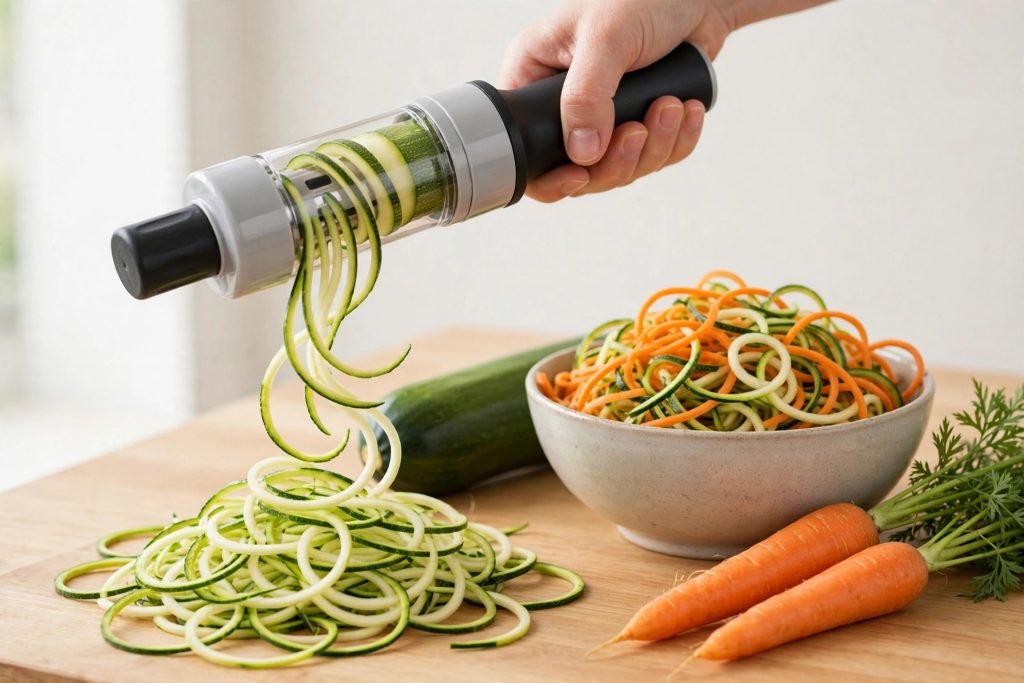
A spiralizer for veggie noodles turns vegetables into noodle strands with a simple motion, and it turns a small kitchen job into a quick and tidy routine. Many home cooks face this small job often, yet doing it by hand takes time and the result often comes out uneven. A spiralizer takes that worry away, since it holds the vegetables steady and does the firm work in a smooth and even way. The result is a clean finish that looks good and works well, which makes home cooking feel less like a chore and more like a pleasure. This guide explains why the tool matters, how it works, what to look for when you buy one, how to use it well, and how to keep it clean and ready for the next meal. The tool also keeps the work tidy, since the bench stays clean while the job grows. A cook who can finish this small job fast can also try new recipes without spending the whole evening at the bench. Once the motion feels natural, the tool earns its place in the drawer, since it saves time on every use.
Why Veggie Noodles Matter
Veggie noodles matter because the tool solves a small problem that many home cooks know well, and the fix is easy to see in use. A cook who has struggled with uneven pieces will pick up a spiralizer, try one smooth motion, and see a neat result at once. The tool suits a wide range of cooks, from busy parents to cooks who love trying new dishes, and it works with many kinds of vegetables. It also suits cooks with stiff hands, since the tool does the firm work that fingers find hard. A neat result also cuts waste, since food that comes out clean is less likely to end up spoiled or thrown away. A spiralizer also helps cooks who are new to the tool, since the motion is easy to learn and a first try usually comes out well. When the work feels easy, cooks reach for the tool more often, and a simple tool earns its place in the kitchen.
How a Spiralizer for Veggie Noodles Works
A spiralizer for veggie noodles works by holding the vegetables steady and applying a smooth and even force, so the shape forms in a single motion. You place the vegetables against the tool, guide it with a steady hand, and the blade plate does the firm work for you. Most models are a simple tool with a clear working part and a comfortable grip, and the design is built to suit everyday use. The tool is usually made from sturdy plastic with stainless steel blades, and the working part is built to keep its edge through many uses. Some models offer more than one setting, while others keep a single simple action, and both styles work well when the vegetables are fresh and firm. Once you have used the tool a few times, the motion becomes quick and steady, and a full batch takes far less time than working by hand. A model with a firm grip suits hands of many sizes, while a model with a soft grip suits a cook who wants comfort on a long job. The tool works best when the vegetables are dry on the outside, since a dry surface grips well and slips less.
Choosing the Right Spiralizer for Your Kitchen
Choosing a spiralizer starts with the size of the vegetables you handle most, since the tool must match the job or the result will not come out cleanly. Check that the grip feels comfortable in your hand and that the tool closes or turns fully without forcing it. The material matters too, since sturdy plastic with stainless steel blades will last longer than thin material that flexes under pressure. Look for a working part with a clear and even edge, since a crisp edge works better and lasts longer. A model that comes in more than one size suits cooks who handle both small and large vegetables, and a set that nests together stores neatly in a drawer. A set with more than one size is handy for cooks who prepare food for parties as well as for family meals. For cooks looking for everyday kitchen tools, Skyrocs offers a helpful starting point, and the pet supplies range covers daily items for homes that share their kitchen with a cat or a dog. A tool that feels solid in the hand is usually the right pick, since a flimsy tool will bend or slip when the job gets firm. Pick a model that is easy to wash, since a tool that cleans fast gets used far more often than one that needs a long scrub.
Using Your Spiralizer for Veggie Noodles
Using a spiralizer for veggie noodles well starts with a clean and dry bench, since a vegetable that slips will give a rough result. Hold the tool with a firm grip, place the vegetables in position, and work with a steady motion, since a steady pace gives the neatest result. Work through the job at a steady pace, and keep things tidy as you go, since a tidy bench keeps the work moving. With a little practice, each one takes only a few moments, and the job moves fast. Use the same firm motion each time, since an even motion gives an even result across the whole job. Stop now and then to check the result, since a quick look tells you if the grip or the pace needs a small change. Keep fingers clear of the working part, since the working part is made for the job and not to touch skin. A cook who works in small batches will find the job easier, since a full bench is harder to manage than a tidy one.
Cleaning and Storing Your Spiralizer for Veggie Noodles
A spiralizer for veggie noodles earns its place when it is easy to clean, since dried residue in the working part will spoil the next use. Rinse the blades under warm water as soon as you finish, and use a soft brush or cloth to clear food from the blade plate and the grip. A little mild soap helps with sticky residue, and the tool should be dried at once with a clean towel, since water left on metal can dull the finish over time. Avoid harsh scourers on the working part, since scratches catch residue and make the next use harder. Check the grip now and then to make sure it still feels firm, since a loose grip will not hold a steady motion. Store the tool in a drawer or hang it on a hook where it is easy to reach, rather than buried under heavier pans that could bend it. A dry tool stores best in a cool cupboard away from heat, since heat can warp thin plastic over time. A clean tool is also a safe tool, since residue left in the working part can turn stale and spoil the next use.
Frequently Asked Questions
Is a spiralizer for veggie noodles needed for home cooking?
It is not needed, yet it makes the job far faster and neater, so cooks who face the job often will find it worth the drawer space, while cooks who face it rarely can manage by hand. A tool also speeds up the work when cooking for guests, since a large batch takes far less time than working by hand.
How does a spiralizer for veggie noodles work?
You place the vegetables in position, hold the grip firm, and work with a steady motion, and the blade plate shapes the result in one smooth action.
Can a spiralizer for veggie noodles handle many vegetables?
Yes, it suits zucchini, carrots, cucumbers, and sweet potatoes alike, as long as the vegetable is fresh and firm, so the strands come out neat and even.
How do I clean a spiralizer for veggie noodles after use?
Rinse the blades under warm water at once, clear food from the working part with a soft brush, use a little mild soap for sticky food, and dry it fully before you store it.
What should I look for when buying a spiralizer for veggie noodles?
Look for sturdy plastic with stainless steel blades, a grip that feels firm and comfortable, a working part with a clear and even edge, and a size that stores easily in your drawer. A model that comes in a handy size is a bonus, since it lets you handle both small and large vegetables with one tool.