
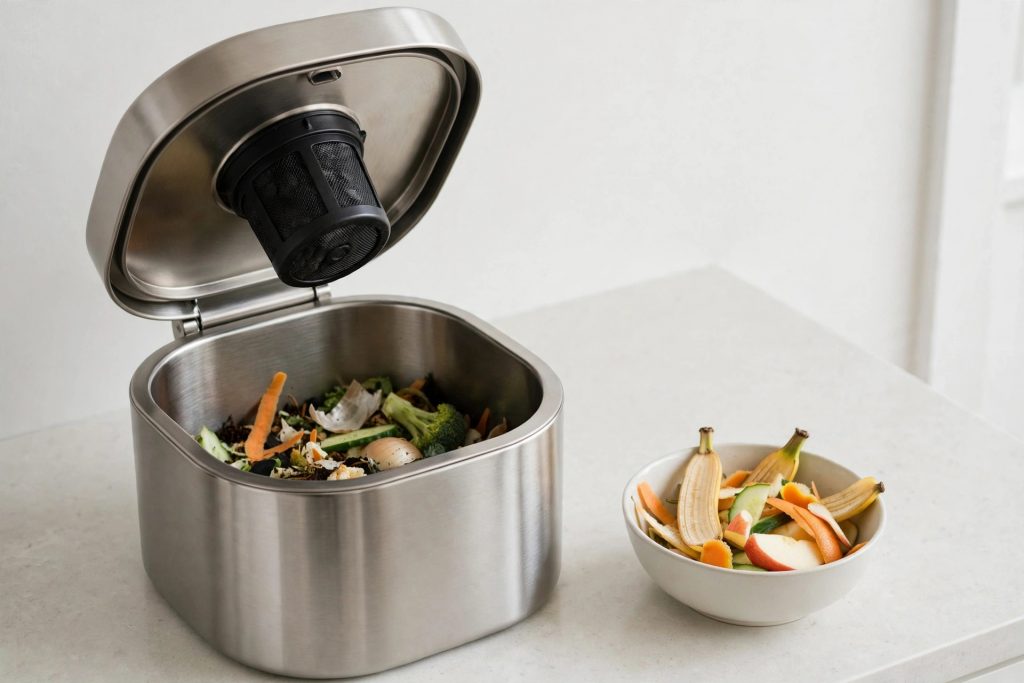
A compost bin for easy composting turns kitchen scraps into a tidy daily habit, since it gives fruit peels, vegetable trimmings, coffee grounds, and eggshells a clean home on the bench until they reach the compost heap. Many cooks throw scraps in the rubbish bin, yet those scraps can feed the garden instead, and a small bench bin makes that choice easy. A bin with a snug lid keeps smells low, keeps fruit flies out, and keeps the bench looking neat, so composting feels simple rather than messy. The bin sits near the chopping board, so scraps go straight in while you cook, and the habit soon becomes second nature. This guide explains why easy composting matters, how a compost bin works, what to look for when you buy one, how to use it well, and how to keep it clean and ready for the next meal. A tidy bin also helps a household waste less, since scraps that once went to landfill now head for the garden. A compost bin that fits the kitchen well soon becomes part of the daily routine, since the best tools are the ones that are easy to reach and easy to use.
Why Easy Composting Matters
Easy composting matters because kitchen scraps make up a large share of household rubbish, and a bench bin turns that waste into something useful for the garden. Compost feeds the soil, helps plants grow, and cuts the rubbish that a household sends away each week. A home that composts feels greener, since the peelings from dinner become food for the garden beds. Children learn where food comes from when they scrape plates into the bin and later see the garden thrive. Easy composting also keeps the kitchen cleaner, since scraps leave the bench at once instead of sitting on a plate or in the sink. A bin that is easy to use gets used every day, while a bin that is awkward soon sits empty in a cupboard. When composting feels easy, a household sticks with it for years, and the garden gains season after season. A kitchen that works well makes the whole household calmer, since meals, snacks, and gatherings all flow from the same room. A bin that sits by the chopping board gets used far more than a bin that hides in a cupboard, since the shortest path wins when hands are busy. A clean bin smells of nothing at all, which is the best sign that the lid and the filter are doing their job.
How a Compost Bin for Easy Composting Works
A compost bin works by holding scraps in a sealed container with a lid that locks smells in and keeps flies out. You lift the lid, drop in fruit peels, vegetable trimmings, coffee grounds, tea leaves, and crushed eggshells, and close the lid again. Many bins hold a charcoal filter in the lid, and the filter catches smells so the bench stays fresh. The bin often comes with a removable inner bucket, so you can lift the whole bucket out and carry it to the compost heap. Some bins take compostable liners, which keep the bucket clean and make emptying a quick job. A handle on the bucket or the bin helps you carry it outside without spills. Once the bin is empty, a quick rinse leaves it ready for the next round of scraps. Once you have used the compost bin a few times, the motion becomes quick and steady, and the job takes far less time than the old way. Scraps that reach the heap quickly break down better, since fresh material mixes well with dry leaves and soil. A tool that is easy to reach gets used far more than a tool that hides at the back of a cupboard.
Choosing the Right Compost Bin for Your Kitchen
Choosing a compost bin starts with the size of your kitchen, since a bin that is too large crowds the bench and a bin that is too small needs emptying too often. A small household suits a compact bin, while a family that cooks often needs a larger one. The material matters too, since stainless steel wipes clean and lasts well, while sturdy plastic is light and easy to carry. Look for a lid that closes firmly, since a loose lid lets smells escape and lets flies in. A charcoal filter is worth having, since it keeps the air near the bench fresh between emptying days. Check that the inner bucket lifts out smoothly, since a bucket that sticks makes emptying a chore. For cooks looking for everyday kitchen tools, Skyrocs offers a helpful starting point, and the pet supplies range covers daily items for homes that share their kitchen with a cat or a dog. A compost bin that comes in more than one size suits cooks who cook for one as well as cooks who cook for a crowd. A household that composts together wastes less food, since the bin makes the value of scraps plain to see.
Using Your Compost Bin for Easy Composting
Using a compost bin well starts with keeping it near the chopping board, since scraps should go in at once while you cook. Scrape peels and trimmings straight into the bin, and keep the lid closed between additions so smells stay inside. Add coffee grounds and eggshells too, since both break down well in the heap. Keep meat, dairy, and oily food out of the bin, since those items smell and attract pests. Empty the bin every few days, before it fills to the brim, so the lid still closes firmly. Carry the inner bucket to the heap, tip the scraps in, and cover them with dry leaves or soil. A quick wipe of the bucket after each emptying keeps the bin fresh for the next round. Work at a steady pace, and keep the bench clear while you work, since a clear bench makes every job easier. The right bin turns a chore into a habit, and a habit kept for years feeds the garden season after season.
Cleaning and Storing Your Compost Bin for Easy Composting
A compost bin earns its place when it is easy to clean, since dried scraps left in the bucket will smell. Rinse the bucket with warm water after each emptying, and use a soft brush to clear scraps from the rim and the lid. A little mild soap helps with sticky residue, and the bin should be dried at once with a clean towel. Wash the charcoal filter holder now and then, and replace the filter when smells return. Avoid harsh scourers on stainless steel, since scratches catch residue and dull the finish. Store the bin on the bench where it is easy to reach, rather than hidden in a cupboard where scraps will pile up elsewhere. A dry bin stores best in a cool spot away from heat, since heat can warp plastic lids over time. Check the compost bin now and then to make sure it still works smoothly, since a loose part will spoil the next use. Keep a spare liner near the bin, so emptying stays quick even on busy cooking days.
Frequently Asked Questions
Is a compost bin for easy composting needed for home cooking?
It is not needed, yet it makes composting far simpler, so cooks who care about the garden will find it worth the bench space, while cooks who rarely compost can manage without one. A bin also keeps scraps tidy when cooking for guests, since peels go straight in instead of piling on the bench.
How does a compost bin for easy composting work?
You lift the lid, drop scraps into the inner bucket, and close the lid, and the charcoal filter in the lid keeps smells low while the sealed bin keeps flies out until you carry the bucket to the heap.
Can a compost bin for easy composting handle coffee grounds and eggshells?
Yes, it suits coffee grounds, tea leaves, and crushed eggshells alike, as long as you keep meat, dairy, and oily food out, since those items smell and attract pests.
How do I clean a compost bin for easy composting after use?
Rinse the inner bucket with warm water after each emptying, clear scraps from the rim with a soft brush, use a little mild soap for sticky residue, and dry it fully before you put it back on the bench.
What should I look for when buying a compost bin for easy composting?
Look for a size that suits your household, a lid that closes firmly, a charcoal filter for fresh air, an inner bucket that lifts out smoothly, and a material that wipes clean and lasts well.