
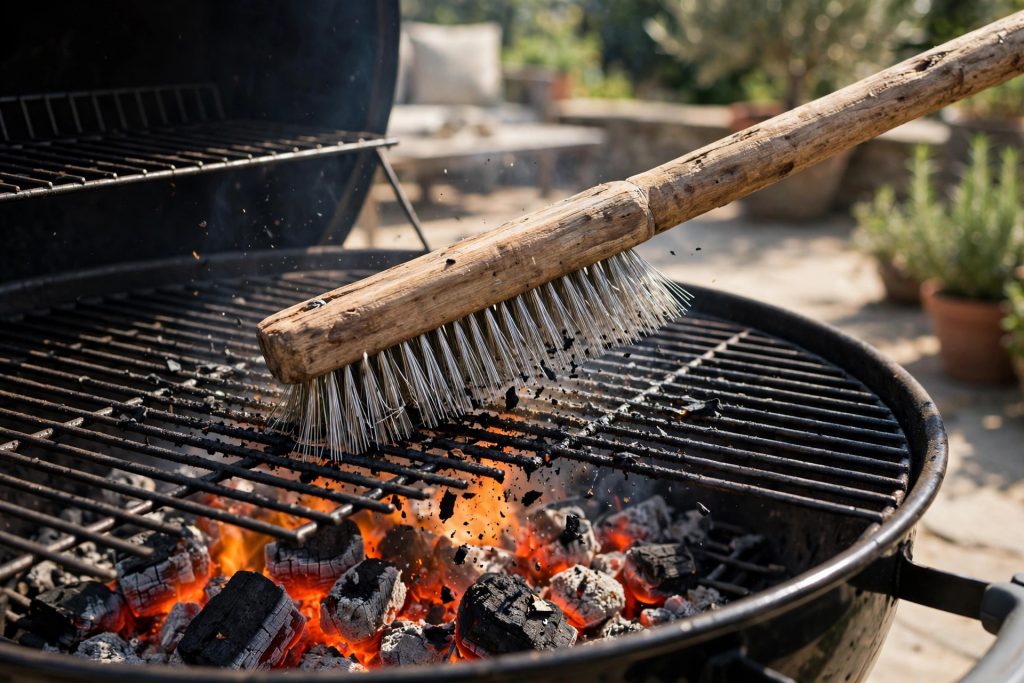
A grill brush for clean grills scrubs burnt food off hot grates, so home cooks grill on a clean surface and the food tastes of smoke and seasoning instead of old char. Many home cooks love grilling yet dread the grate, because meat and marinade stick fast and the black crust left behind can spoil the next meal. A grill brush takes that worry away, since stiff bristles scrape the grate clean while it is still warm, and the next batch of food lifts off easily. The brush also keeps the work tidy, since a clean grate needs less oil and the food cooks evenly instead of sticking in patches. This guide explains why clean grills matter, how a grill brush works, what to look for when you buy one, how to use it well, and how to keep it clean and ready for the next cookout. With a little care, a home cook can keep the grate clean after every grill, and the tool earns its place beside the barbecue.
Why Clean Grills Matter
Clean grills matter because old char on a grate burns again and gives fresh food a bitter taste that no seasoning can hide. A clean grate also cooks evenly, since food sits flat on the bars and heat reaches it from below without a crust in the way. Clean grills are safer too, since a thick layer of grease and char can flare up and scorch the food or the hands that tend it. A clean grate helps food lift off easily, since meat that meets bare metal sears and releases, while meat that meets old crust sticks and tears. For a cook who grills often, a clean grate builds confidence, since each meal starts on a fresh surface and the results stay steady. Clean grills also last longer, since a grate that is scrubbed after each use will not rust under a layer of damp food. A tidy grill also looks cared for, so guests at a cookout see a clean grate and trust the food that comes off it. Clean grills matter most in summer, when the grill is used often and a dirty grate would spoil meal after meal.
How a Grill Brush For Clean Grills Works
A grill brush works by dragging stiff bristles across the grate so they scrape burnt food off the bars in short strokes. You hold the long handle, press the bristle head onto the warm grate, and push it back and forth, and the bristles reach into the gaps between the bars. Some brushes use wire bristles that cut through hard char, while others use stiff nylon or brass that suits a grate with a coating. A brush with a scraper edge helps too, since the flat edge can lift a stubborn patch that the bristles cannot shift. The long handle keeps hands away from the heat, so the grate can be scrubbed while it is still warm and the food comes off easily. Most brushes are made with a sturdy handle of wood or plastic that feels firm in the hand, and the head is fixed tightly so it does not wobble. A brush with a wide head covers the grate fast, while a narrow head suits a small grill or a grate with tight bars. Once you have scrubbed a grate a few times, the motion becomes steady, and a full clean takes only a short while.
Choosing the Right Grill Brush for Your Kitchen
Choosing a grill brush starts with the type of grate you own, since a bare steel grate suits wire bristles while a coated grate needs a softer touch. A brush with a long handle suits a large grill, since it keeps hands away from the heat and reaches across the whole grate. The bristle material matters too, since stainless steel cuts hard char, brass is gentler on coated bars, and stiff nylon suits a grate that must not scratch. Look for a head that feels firmly fixed to the handle, since a loose head can wobble and slip while you scrub. Check that the bristles are set tightly, since a brush that sheds bristles can leave metal in the food. A brush with a scraper edge helps with stubborn patches, and a hanging hole makes storage easy. For cooks looking for everyday kitchen tools, Skyrocs offers a helpful starting point, and the pet supplies range covers daily items for homes that share their kitchen with a cat or a dog. A brush with a wide head suits a large grill, while a narrow head suits a small portable grill.
Using Your Grill Brush For Clean Grills
Using a grill brush well starts with scrubbing the grate while it is still warm, since warm char lifts far more easily than cold char. Hold the brush by the handle, press the head onto the grate, and push it back and forth in short strokes along the bars. Work across the whole grate in rows, so no patch is missed, and give stubborn spots a second pass with the scraper edge. Brush with the bars as well as across them, since food can hide in the gaps and a pass from each side clears it fully. Wipe the grate with a damp cloth after brushing, since the cloth lifts the loose ash that the brush has freed. Oil the grate lightly once it is clean, since a thin coat of oil helps the next batch of food release easily. Work at a calm pace and keep your hands clear of the hot bars, since a burn spoils the meal and the day. If the grate is very dirty, heat it for a short while first, since heat loosens the char and the brush can clear it faster.
Cleaning and Storing Your Grill Brush For Clean Grills
A grill brush earns its place when it is easy to clean, since grease on the bristles will spoil the next scrub. Rinse the brush under warm water as soon as you finish, and use a little mild soap to shift any grease that clings to the bristles and the handle. A soft brush helps clear food from between the bristles, while a harsh scourer can bend the bristles out of shape. Dry the brush at once with a clean towel, since water left on steel bristles can dull the finish over time. Check the bristles now and then to make sure none are loose, since a brush that sheds bristles should be replaced at once. Hang the brush on a hook where air can reach it, so it dries fully and stays ready for the next grill. Keep the brush away from damp corners, since damp can rust steel bristles and warp a wooden handle. A clean brush stores best in a dry spot near the grill, since a brush that is easy to reach gets used after every meal. Wipe the handle dry before you store it, since grease left on the grip can turn sticky.
Frequently Asked Questions
Is a grill brush for clean grills needed for home grilling?
It is not needed, yet it keeps the grate clean and the food tasting fresh, so cooks who grill often will find it worth the space beside the grill, while cooks who grill rarely can manage with a scraper. A brush also helps when grilling for guests, since a clean grate cooks evenly and the food lifts off without tearing.
How does a grill brush for clean grills work?
You press the bristle head onto the warm grate and push it back and forth, and the stiff bristles scrape burnt food off the bars while the long handle keeps your hands away from the heat.
Can a grill brush for clean grills handle different grates?
Yes, it suits bare steel, cast iron, and coated grates alike, as long as the bristle type matches the grate, so wire suits bare steel and a softer bristle suits a coated grate.
How do I clean a grill brush for clean grills after use?
Rinse it under warm water at once, wash it with a little mild soap, clear food from between the bristles, dry it fully, and hang it where air can reach it.
What should I look for when buying a grill brush for clean grills?
Look for a long handle, bristles that match your grate, a head that is firmly fixed, tightly set bristles, and a scraper edge for stubborn patches. A hanging hole makes storage easy.