
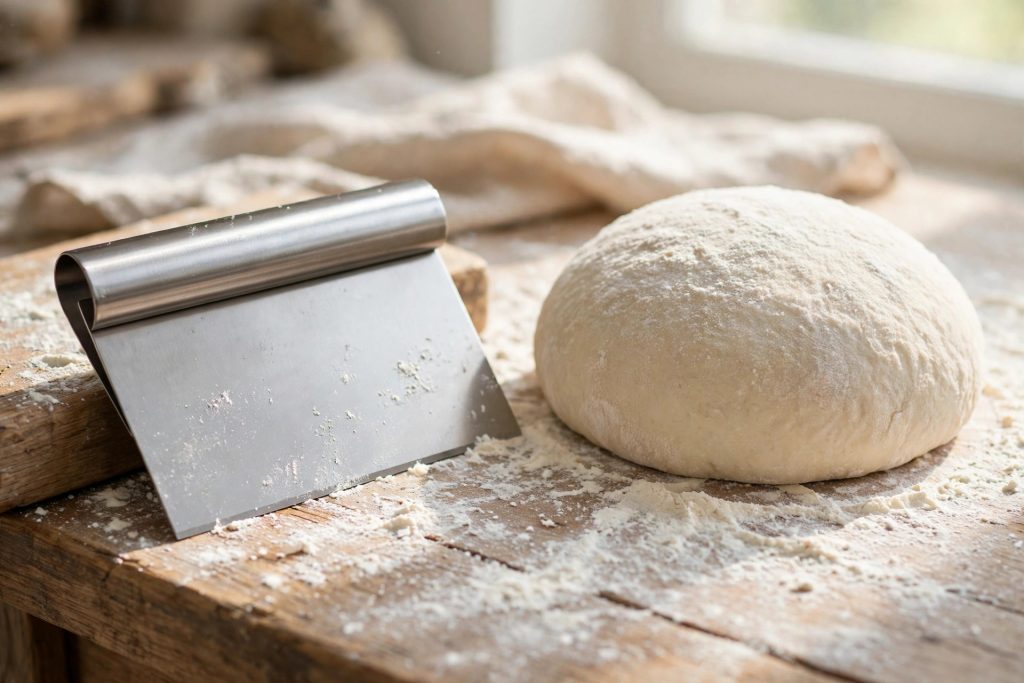
An bench scraper for clean cutting makes cutting and moving dough simple, so home cooks can divide dough neatly and keep the bench tidy without fuss or waste. Many kitchens struggle with dough that sticks to the bench and tears when lifted, and a tool that slides under dough and lifts it cleanly turns a slow chore into a quick step. A bench scraper works by a straight steel edge that slides under dough and lifts it cleanly, so each piece of dough comes out neat and ready for the next step. The tool also suits cooks of all levels, from beginners who want a forgiving tool to keen bakers who want tidy results every time. This guide explains why clean cutting matters, how a bench scraper works, what to look for when you buy one, how to use it well, and how to clean and store it so it stays sharp and ready. A good bench scraper also lasts well when it is cared for, so one tool can serve a kitchen for a long time.
Why Clean Cutting Matters
Why clean cutting matters is easy to see on a busy day, since dough cut with a knife tears and sticks, while a scraper divides it in one clean pass. A tool that slides under dough and lifts it cleanly saves time at the bench, and time saved at the bench is time a cook can spend on the meal itself. Neat results also cut waste, since a scraper lifts every scrap of dough, so no dough is left stuck to the bench, and less waste means the food a cook buys goes further. Clean work also keeps the kitchen safer, since a scraper keeps fingers clear of a blade, while a knife near sticky dough can slip, and a tidy bench is easier to wipe down at the end of cooking. When a small job feels quick and easy, it gets done more often, and a simple tool helps a home cook stay on top of daily prep with little effort.
Bread, rolls, and pastry all need clean cuts, so a tool that divides dough well gets used often. A bench scraper also gives steady results, so a cook does not need to guess or redo a step, and steady results build confidence in the kitchen.
How a Bench Scraper for Clean Cutting Works
A bench scraper works through a simple idea, since a straight steel edge slides under dough and lifts it cleanly while the bench stays smooth beneath. The edge does the main work, and the handle gives the cook a firm grip so the tool stays steady through each pass. Good design keeps the action smooth, so the cook can work with gentle pressure rather than force, and gentle pressure gives cleaner results. The tool needs no power and no setup, so it is ready the moment it comes out of the drawer, and it works the same way every time. A bench scraper that is well made feels solid in the hand, and a solid feel helps the cook trust the tool through a long session.
Materials matter in how a bench scraper feels and lasts, since steel edges stay straight and rinse clean, while a firm handle gives a steady grip. A handle that fits the hand keeps the tool comfortable, and a comfortable tool is easier to control when hands are damp or busy. Size matters as well, since a tool that suits the piece of dough in hand works better than one that is too large or too small for the job. Some cooks keep two sizes, one for everyday jobs and one for larger batches, so the right tool is always close at hand.
Choosing the Right Bench Scraper for Your Kitchen
Choosing a bench scraper starts with the job you do most, since a wide scraper suits large loaves and a slim scraper suits small rolls. Check that the edge feels straight and smooth, since a tool that is well made cleans better and lasts longer than a thin tool that feels rough. Look at the handle too, since a handle that fits the hand keeps the tool steady, and a tool that slips soon loses its charm. Weight matters as well, since a tool that is too heavy tires the hand, while a tool that is too light can feel flimsy through a long session.
Think about cleaning before you buy, since a tool that is easy to wash gets used more often, and a tool that traps food in seams soon stays in the drawer. A bench scraper with smooth lines and few hiding places rinses clean under the tap, so it is ready again fast. Storage matters too, since a tool that hangs on a hook or slips into a drawer stays within reach when the job comes up. For cooks looking for everyday kitchen tools, Skyrocs offers a helpful starting point, and the pet supplies range covers daily items for homes that share their kitchen with a cat or a dog.
Using Your Bench Scraper for Clean Cutting
Using a bench scraper well starts with dusting the bench lightly, so the dough lifts without sticking. Work with steady pressure and a calm pace, since rushing the job can spoil the result, while a steady hand keeps each piece of dough neat. Hold the piece of dough firmly and keep fingers clear of the edge, since a tool that is sharp or firm needs respect even when it feels simple.
Press the edge down with steady pressure to cut, then slide it under the dough to lift and move each piece. Work in small batches when the pile is large, since a fresh eye and a steady hand give better results than a tired rush through a mountain of prep. Keep the bench clear as you work, so each finished piece of dough has a clean place to rest, and wipe the tool when it starts to drag.
Cleaning and Storing Your Bench Scraper for Clean Cutting
A bench scraper earns its place when it is easy to clean, since a tool that stays dirty will spoil the next job. Rinse the tool under warm water after each use, and wash it with mild soap when it looks dull or feels sticky. Avoid harsh scouring pads, since rough scrubbing can dull the edge and spoil the finish, and a dull tool works harder than a sharp one.
Store the bench scraper where it is easy to reach, in a drawer or on a hook, rather than buried under heavier tools that could bend or blunt it. Keep the edge covered or turned away from other tools when you can, so it stays sharp and safe in the drawer.
Frequently Asked Questions
Is a bench scraper for clean cutting needed for home cooking?
It is not needed, yet it makes cutting and moving dough far faster, since a bench scraper slides under dough and lifts it cleanly, so the bench stays tidy, so homes that cook often will find it worth keeping in the drawer. A tool that gives neat results also suits cooks who want tidy prep without fuss.
How does a bench scraper for clean cutting work?
A bench scraper works by a straight steel edge that slides under dough and lifts it cleanly, so each piece of dough comes out neat with little effort. The handle gives a firm grip, so the cook can work with steady pressure and keep control through the whole job.
Can a bench scraper for clean cutting handle bread dough and pastry dough?
Yes, a bench scraper handles bread dough and pastry dough alike, and a straight edge cuts either dough cleanly with ease, and a quick check of the first result shows whether the size and shape suit the job. Cooks who work with varied produce often keep a tool that suits the largest item they handle.
How do I clean a bench scraper for clean cutting after use?
Rinse it under warm water after use, wash it with mild soap when it looks dull, avoid harsh scouring pads, and dry it fully before you put it away. A tool that is washed and dried well stays sharp and ready for the next use.
What should I look for when buying a bench scraper for clean cutting?
Look for a bench scraper with a straight smooth edge, a handle that fits the hand, and smooth lines that rinse clean. A tool that feels solid and comfortable in the hand will work better than a thin tool, so trust the feel as well as the look.