
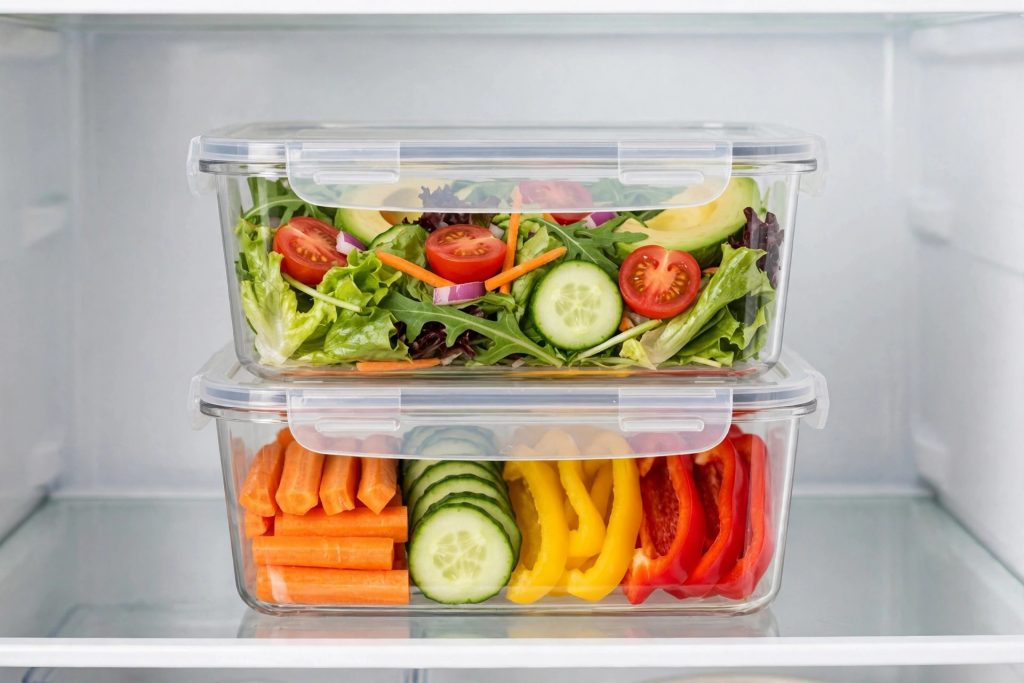
A food storage container for fresh food turns a messy fridge into a tidy shelf, since it holds leftovers and fresh food in a sealed box that keeps air out and flavour in. Many cooks throw away food that has gone soft or stale, because an open bowl in the fridge dries out fast and picks up smells from other foods. A container with a tight lid takes that worry away, since the food stays fresh for longer and the fridge stays clean and free of spills. The result is less waste and quicker meals, whether you store cooked rice, cut vegetables, or a salad for lunch. This guide explains why fresh food matters, how a container works, what to look for when you buy one, how to use it well, and how to keep it clean and ready for the next meal. A container also helps you plan ahead, since a meal cooked today can be packed and ready for tomorrow.
A container suits every kind of cook, from a parent packing lunch before school to a cook who likes to cook once and eat well all week. It costs little, stacks neatly, and asks for no skill, yet it lifts daily cooking from waste and mess to a tidy routine.
Why Fresh Food Matter
Fresh food matters because food that stays fresh tastes better and wastes less, and a container turns a fridge full of open bowls into a shelf you can trust. A salad that stays crisp is a pleasure, while cut vegetables that have dried out end up in the bin, and the gap between the two is a lid that seals well. A container holds the freshness in, so leftovers taste nearly as good the next day as they did when they were cooked. Fresh food also suits many meals, from a packed lunch to a quick dinner, so a cook who can store it well can cook less often and eat well all week.
Fresh storage also cuts waste, since food stored in a sealed container stays good for longer and gets eaten instead of thrown away. A family that can store leftovers well can cook a large meal once and enjoy it again, and that saves time as well as food. A container also helps when you shop in bulk, since fresh food bought on sale can be stored safely and used through the week.
How a Food Storage Container for Fresh Food Works
A food storage container for fresh food works by sealing food inside a box with a tight fitting lid, so air stays out and the food keeps its moisture and flavour. You place the food inside, press the lid down until it clicks or seals around the rim, and the box keeps the food fresh in the fridge or the cupboard. Most containers are a clear plastic or glass box with a lid that snaps shut, and the clear walls let you see what is inside without opening the lid. Some containers have a vent in the lid for warming food, while others have dividers that keep different foods apart, and both styles keep the food tidy.
A container works best when the lid seals tightly and the box is the right size for the food, since a box that is too large lets in too much air and a lid that does not seal lets the food dry out. A container with a clear body is easy to spot on a crowded shelf, and a container that stacks neatly saves space in the fridge. Most containers suit the fridge, the freezer, and the lunch bag, so match the size to the way you store food most days.
Choosing the Right Food Storage Container for Your Kitchen
Choosing the right food storage container starts with the food you store most, since a shallow box suits salads and sandwiches, while a deep box suits soups and stews. Check that the lid seals tightly all the way around, since a lid that gaps at one corner will let air in and spoil the food. A glass container lasts longer than a plastic one and does not stain, while a plastic container is lighter and safer for a lunch bag. Look for a container that is easy to open with wet hands, since a lid that sticks will spill food across the bench, and a box that stacks neatly saves space in the fridge. A container with a vent in the lid suits warming food, while a container with dividers suits a lunch with several parts. For cooks looking for everyday kitchen tools, Skyrocs offers a helpful starting point, and the pet supplies range covers daily items for homes that share their kitchen with a cat or a dog.
Size matters too, since a small box suits a single lunch while a larger box suits a family meal, and a set that nests together stores neatly in a cupboard. Some containers come in a set of several sizes, which lets you store a whole meal in matching boxes. Think about how you store food most days, and pick the style that fits that routine rather than the one with the most features.
Using Your a Food Storage Container for Fresh Food
Using your food storage container for fresh food starts with letting hot food cool a little before you seal the lid, since steam trapped inside will fog the box and make the food soggy. Place the food inside, press the lid down firmly until it seals all the way around, and label the box if you store several meals at once, since a label tells you what is inside and when it was cooked. Place the box in the fridge with the lid facing up, and stack boxes of the same size so the shelf stays tidy. When you warm the food, open the vent or lift one corner of the lid so steam can escape, and stir the food so it heats evenly.
Keep the boxes clean and dry between uses, and do not overfill them, since a box filled to the brim will spill when the lid goes on. If you pack lunch, use a box with dividers so the foods stay apart and the lunch looks neat when it is opened.
Cleaning and Storing Your a Food Storage Container for Fresh Food
A food storage container earns its place when it is easy to clean, since dried food in the corners will spoil the next meal. Rinse the box under warm water as soon as you finish, and use a soft brush or cloth to clear food from the corners and the lid seal. A little mild soap helps with greasy food, and the box should be dried at once with a clean towel, since water left in the seal can smell stale over time. Avoid harsh scourers on the box, since scratches catch food and make the next meal harder to clean. Check the lid seal now and then to make sure it still closes firmly, since a worn seal will not keep air out.
A glass box can go in the dishwasher, while a plastic box is best washed by hand so the lid stays true. With a little care after each use, a set of containers will serve you for years and keep your food tasting fresh.
Frequently Asked Questions
Is a food storage container for fresh food needed for home cooking?
It is not needed, yet it keeps food fresh for longer and cuts waste, so cooks who store leftovers often will find it worth the shelf space, while cooks who cook fresh each day can manage with less.
How does a food storage container for fresh food work?
It seals food inside a box with a tight fitting lid, so air stays out and the food keeps its moisture and flavour in the fridge or the cupboard.
Can a food storage container for fresh food handle hot and cold food?
Yes, it suits hot leftovers once they have cooled a little and cold salads alike, as long as you open the vent or lift a corner of the lid when you warm food.
How do I clean a food storage container for fresh food after use?
Rinse it under warm water at once, clear food from the corners and the lid seal with a soft brush, use a little mild soap for grease, and dry it fully before you store it.
What should I look for when buying a food storage container for fresh food?
Look for a lid that seals tightly all the way around, a size that suits your meals, clear walls so you can see inside, and a shape that stacks neatly in the fridge.