
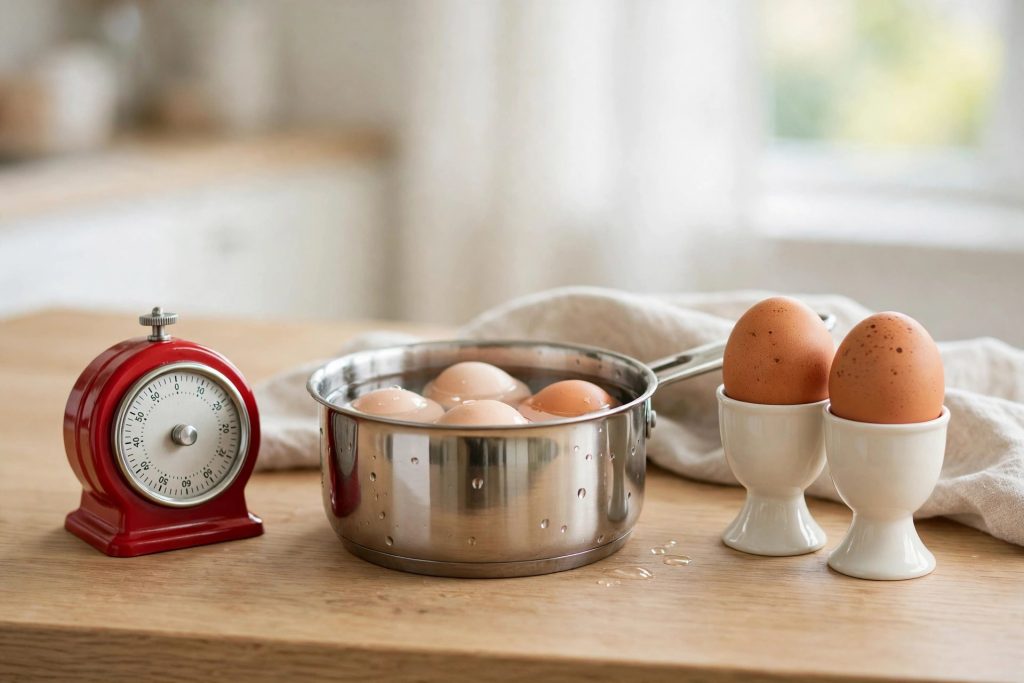
An egg timer for perfect eggs turns a small daily guess into a calm routine, since it counts down the minutes while the eggs sit in hot water and rings when the time is up. Many cooks love boiled eggs yet end up with yolks that are too soft or too firm, because a glance at the clock is easy to forget once the kettle boils and the morning rush begins. A timer takes that worry away, since it keeps the time for you while you set the table or make toast, and the ring tells you exactly when to lift the eggs out. The result is eggs with whites that are set and yolks that suit your taste, whether you like them soft and runny or firm all the way through. This guide explains why perfect eggs matter, how a timer works, what to look for when you buy one, how to use it well, and how to keep it clean and ready for the next breakfast. A timer also helps when you cook for the family, since a batch of eggs timed together comes out even.
A timer suits every kind of cook, from a parent making breakfast before school to a cook who likes a soft egg with soldiers on a slow weekend. It costs little, takes up almost no space, and asks for no skill, yet it lifts a daily meal from guesswork to a result you can repeat.
Why Perfect Eggs Matter
Perfect eggs matter because a boiled egg is a small meal that is easy to get wrong, and a timer turns it into a result you can count on every morning. A soft yolk that spreads over toast is a pleasure, while a yolk that has gone grey and chalky spoils the plate, and the gap between the two is only a short stretch of time. A timer holds that stretch for you, so the eggs come out the same way whether the morning is calm or rushed.
Perfect timing also cuts waste, since eggs that are cooked just right get eaten with pleasure while overcooked eggs often end up left on the plate. A family that can time a batch of eggs together can serve everyone at once, with each egg cooked the same way, and that makes busy mornings run more smoothly. A timer also helps when you cook eggs for guests, since a neat row of evenly cooked eggs looks cared for and tastes as good as it looks.
How an Egg Timer for Perfect Eggs Works
An egg timer for perfect eggs works by counting down a set stretch of time and sounding a ring or a beep when the count ends, so you know the eggs are ready without watching the clock. The simplest timers are sand timers, where fine sand runs from one glass bulb to another, and the eggs are ready when the last grains fall through. Digital timers let you set the minutes you want with a button and beep when the time is up, while dial timers twist to the time you need and ring as the dial turns back.
A timer works best when it is easy to hear and easy to read, since a ring that is too soft will be missed over the sound of a kettle or a radio. A timer with a clear display or a bright colour is easy to spot on a busy bench, and a timer that stands on its own or hangs on a hook stays where you can see it. Most timers run on a small battery or on sand and gravity, and both kinds last a long time with little care.
Choosing the Right Egg Timer for Your Kitchen
Choosing the right egg timer starts with the way you like to cook, since a sand timer suits a cook who likes a simple visual cue, while a digital timer suits a cook who wants to set exact minutes. Check that the sound is loud enough to hear from another room, since a timer that cannot be heard is no help at all. A timer with a clear display and large buttons is easier to set with wet hands, and a timer that stands firmly on the bench will not tip over when you reach past it. Look for a timer that is easy to clean, since splashes from the pot are part of daily cooking, and a timer that wipes clean with a damp cloth stays looking fresh. A timer in a bright colour is easy to spot in a drawer, while a plain timer suits a quiet kitchen. For cooks looking for everyday kitchen tools, Skyrocs offers a helpful starting point, and the pet supplies range covers daily items for homes that share their kitchen with a cat or a dog.
Size matters too, since a small timer tucks into a drawer while a larger timer with a big display is easier to read at a glance. Some timers time more than one thing at once, which suits a cook who likes to boil eggs while something else cooks on another ring. A timer that hangs on a hook keeps the bench clear, while a timer with a magnet sticks to the fridge where it is always in sight.
Using Your an Egg Timer for Perfect Eggs
Using your egg timer for perfect eggs starts with putting the eggs in the pot and covering them with cold water, since eggs that start in cold water heat evenly and crack less often. Set the timer for the time that suits the yolk you like, and start it as soon as the water reaches a rolling boil, since the count begins at the boil rather than at the moment you light the ring. While the timer counts down, you can set the table or butter the toast, and the ring will tell you when to lift the eggs out.
Keep the timer where you can hear it, and do not wander too far while it counts, since a missed ring can turn a soft yolk firm in a short time. If you cook eggs often, note the time that gives you the yolk you like best, and use that same time each morning so the result stays steady. A timer also helps when you cook a batch for the week, since each batch timed the same way comes out the same, and the eggs keep well in the fridge for quick meals.
Cleaning and Storing Your an Egg Timer for Perfect Eggs
An egg timer earns its place when it is easy to clean, since splashes and steam are part of daily cooking. Wipe a digital timer with a damp cloth after use, and dry it at once so water does not creep into the buttons or the display. A sand timer needs only a wipe with a soft cloth, and the glass should be handled with care so it does not chip.
Avoid soaking a digital timer in water, since water inside the case can damage the works and silence the ring. A timer that has been dropped should be checked before the next use, since a cracked case can let in steam. With a little care after each use, a timer will serve you for years and keep your eggs coming out just right.
Frequently Asked Questions
Is an egg timer for perfect eggs needed for home cooking?
It is not needed, yet it makes boiled eggs far more reliable, so cooks who eat eggs often will find it worth the small space it takes, while cooks who boil eggs rarely can manage with a clock.
How does an egg timer for perfect eggs work?
It counts down the time you set while the eggs sit in hot water, then rings or beeps when the count ends, so you know exactly when to lift the eggs out.
Can an egg timer for perfect eggs handle soft and firm yolks?
Yes, you set a shorter time for a soft yolk and a longer time for a firm yolk, so one timer covers every kind of boiled egg you like.
How do I clean an egg timer for perfect eggs after use?
Wipe it with a damp cloth, dry it at once, and keep water away from the buttons and the display, so it stays clean and ready for the next breakfast.
What should I look for when buying an egg timer for perfect eggs?
Look for a sound you can hear, a clear display, buttons that are easy to press with wet hands, and a size that fits your drawer or hangs neatly on a hook.