
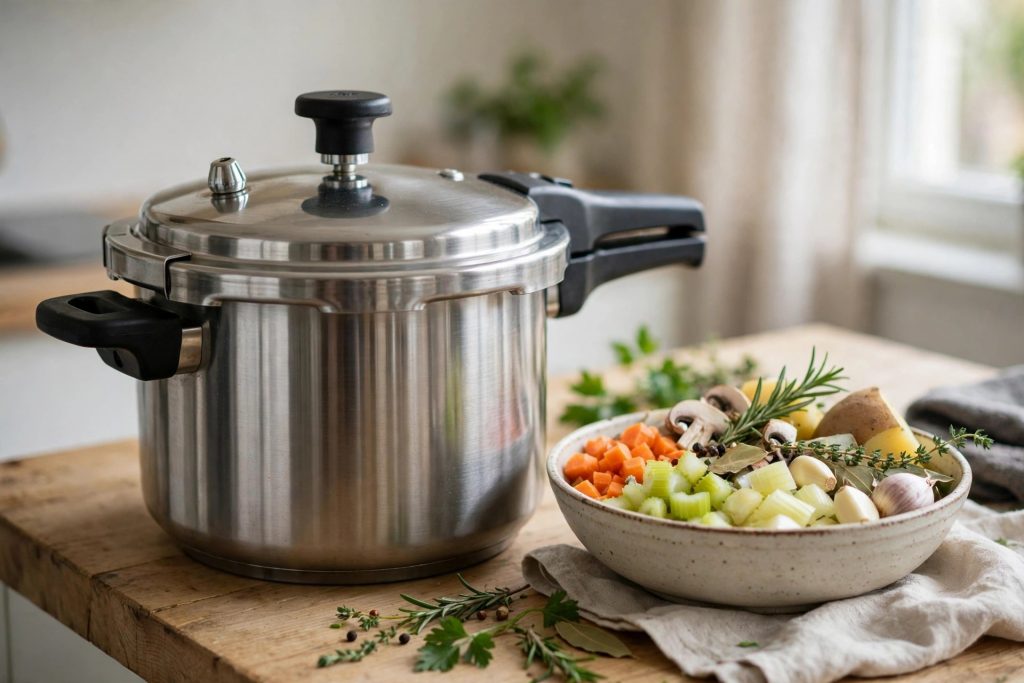
A pressure cooker for fast cooking turns a slow kitchen job into a quick and tidy routine, since it takes the hard work out of cooking and leaves the cook with more time for the meal itself. Many home cooks love stews, soups, beans, and tough cuts of meat, yet the work behind them can feel slow, and a tool that speeds the job up makes home cooking feel easy again. A pressure cooker helps because it is built for one clear job, and a tool that does one job well is often the tool that earns a place in the drawer. The pressure cooker also keeps the bench tidy while the work goes on, since the cook spends less time wrestling with the task and more time enjoying the result. This guide explains why easy cooking matters, how a pressure cooker for fast cooking works, what to look for when you buy one, how to use it well, and how to keep it clean and ready for the next meal.
A good pressure cooker suits cooks of every level, since it guides the work and takes away the guesswork that puts new cooks off. It also suits busy households, since a quicker job means home cooked food lands on the table more often, and that alone makes the tool worth its shelf space. The pressure cooker is a small tool with a clear purpose, and once a cook has used it a few times, the motion feels natural and the results feel steady.
Why Fast Cooking Matters
Easy cooking matters because home cooking should feel like a pleasure, and a tool that takes the strain out of the job brings that pleasure back into the kitchen. A family that can finish a kitchen job fast is more likely to cook together, and children can help with the simple steps while adults handle the rest. A pressure cooker also cuts waste, since work done well the first time means less food spoiled and less time spent fixing mistakes at the bench.
A pressure cooker also helps cooks with stiff hands, since the tool does the firm work that fingers find hard. It keeps the kitchen calm, since a quick job leaves less mess behind and less washing up at the end of the meal. A cook who can finish the job fast can also plan ahead, so a busy weeknight meal is ready with less rush and less stress.
How a Pressure Cooker for Fast Cooking Works
A pressure cooker for fast cooking works by putting a simple idea to work, so the cook gets a steady result with less effort and less mess. The pressure cooker is usually made from stainless steel that feels solid in the hand, and the lid, sealing ring, and valve are built to hold up to daily use without loosening or wearing out fast. You set the pressure cooker up, use it in one smooth motion, and the job is done, and the result comes out even each time.
A pressure cooker with a clear design suits most kitchens, since the parts are easy to see, easy to hold, and easy to clean after the meal. The size of the pressure cooker matters too, since a tool that matches the pot, the tray, or the plate will work better than one that is too small or too large for the job. A well made pressure cooker feels balanced in the hand, and that balance makes the work feel light even when the job itself is a heavy one.
Choosing the Right Pressure Cooker for Your Kitchen
Choosing a pressure cooker starts with the job you do most, since the tool must match the food you cook and the pots and trays you already own. The material matters too, since stainless steel that feels thick and sturdy will last longer than thin material that flexes under pressure. Look for a pressure cooker with a clear and simple design, since a tool that is easy to hold and easy to clean will get used far more often than a fiddly one. A pressure cooker that comes in more than one size suits cooks who make both small batches and larger ones, and a set that nests together stores neatly in a drawer. For cooks looking for everyday kitchen tools, Skyrocs offers a helpful starting point, and the pet supplies range covers daily items for homes that share their kitchen with a cat or a dog.
Check the lid, sealing ring, and valve before you buy, since parts that feel loose or rough will only get worse with daily use. A pressure cooker that feels comfortable in the hand is worth more than a fancy one that slips or strains the wrist, so hold it and test the grip if you can. Price is less important than fit, since a pressure cooker that matches your kitchen will serve you for years, while a poor fit will sit unused in the cupboard.
Using Your Pressure Cooker
Using a pressure cooker well starts with a clean and clear bench, since a tidy work space makes the job faster and the result neater. Set the pressure cooker up before you start, and keep the food or the pot close at hand, since reaching across the kitchen mid task only slows the work down. Work at a steady pace, and check the result as you go, since a small fix early on is easier than a big fix at the end.
Keep the pressure cooker within easy reach while you work, since a tool that is buried in a drawer will not get used. Use a firm and even touch, since a steady motion gives a steady result across the whole batch or the whole meal. If the pressure cooker feels awkward, slow down and adjust your grip, since a small change in how you hold it often fixes the problem at once. A pressure cooker used well becomes a habit, and a habit that saves time in the kitchen is one worth keeping.
Cleaning and Storing Your Pressure Cooker
A pressure cooker earns its place when it is easy to clean, since dried food left on the tool will spoil the next meal. Rinse the pressure cooker under warm water as soon as you finish, and use a soft cloth or brush to clear food from the lid, sealing ring, and valve. A little mild soap helps with stuck food, and the pressure cooker should be dried at once with a clean towel, since water left on the tool can dull the finish over time.
Store the pressure cooker in a drawer or hang it on a hook where it is easy to reach, rather than buried under heavier pans that could bend or crack it. A dry pressure cooker stores best in a cool cupboard away from heat, since heat can warp thin material over time. Keep the pressure cooker apart from sharp tools, since a blade can nick the surface and spoil the finish.
Frequently Asked Questions
Is a pressure cooker for fast cooking needed for home cooking?
It is not needed, yet it makes the job far faster and neater, so cooks who cook often will find it worth the drawer space, while cooks who cook rarely can manage by hand. A pressure cooker also speeds up the work when cooking for guests, since a large meal takes far less time with the right tool.
How does a pressure cooker for fast cooking work?
A pressure cooker for fast cooking puts a simple design to work, so the cook gets a steady result with less effort. You set the pressure cooker up, use it in one smooth motion, and the job is done, and the even result comes out the same each time you use it.
Can a pressure cooker for fast cooking handle beans and tough meat?
Yes, it suits beans, lentils, stews, and tough cuts of meat well, since sealed steam softens fibres that would take far longer in an open pot, and the even heat keeps the dish moist.
How do I clean a pressure cooker for fast cooking after use?
Let the cooker cool and release steam fully, then wash the pot, lid, and sealing ring in warm soapy water, rinse the valve, and dry every part before you store it.
What should I look for when buying a pressure cooker for fast cooking?
Look for a pressure cooker that matches the size of your pots and trays, stainless steel that feels thick and sturdy, parts that move smoothly, a clear and simple design, and a size that stores easily in your drawer. A tool that feels good in the hand is a bonus, since you will reach for it more often.