
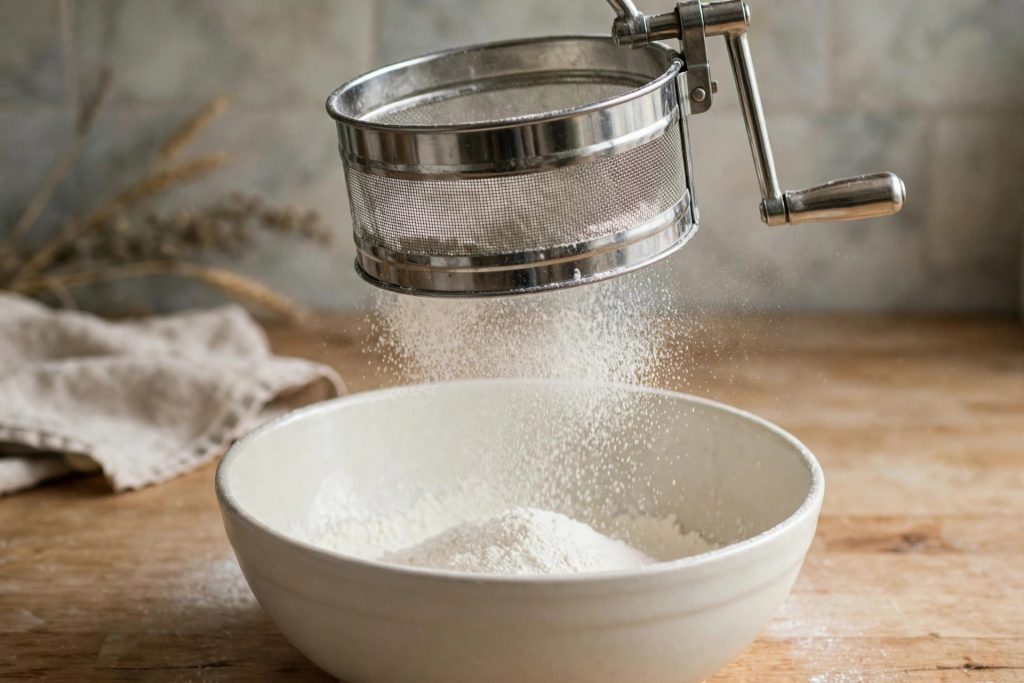
A flour sifter for lump-free baking turns flour that has sat in the bag into a light even powder, since flour packs down in storage and picks up small hard lumps that a spoon cannot break apart. Those lumps stay hidden in the batter and show up later as pale spots in a cake or tough bits in a sauce, and they stop flour from mixing evenly with the other dry goods in the bowl. A sifter shakes the flour through a fine mesh, breaking up lumps and letting air in, so the flour falls soft and even and blends smoothly into the mix. This guide explains why lump-free flour matters, how a flour sifter works, what to look for when you buy one, how to sift well, and how to keep your sifter clean so it is ready every time you bake.
Why Lump-Free Flour Matters
Flour that is light and free of lumps mixes better, and that is the whole point of a sifter, since lumps of flour resist the spoon and stay whole while the rest of the batter turns smooth around them. A cake made with lumpy flour can rise unevenly, because the lumps hold dry flour inside them and leave damp pockets in the crumb where the mix never blended. Sifted flour also blends faster with sugar, cocoa, and baking powder, so the dry goods spread evenly through the bowl and every bite tastes the same. The air that sifting lets in matters too, since light flour folds into eggs and butter without sinking, and a sponge made with sifted flour rises taller and feels softer on the tongue. For bakers who weigh their flour with care, sifting after measuring keeps the amount true, since a packed scoop weighs more than a light one and a lumpy scoop can throw a recipe off. When the flour is light and even, the bake starts right, and every recipe you follow has a better chance of turning out as the writer meant it to.
How a Flour Sifter Works
A flour sifter is a simple cup with a fine mesh base and a way to shake the flour through it, and its design makes the job quick and easy. Most sifters are a metal or plastic cup with a mesh screen across the bottom, and you load the flour in the top, then turn a crank or squeeze a handle that moves a small arm across the mesh. The arm breaks up lumps and pushes the flour through the screen, while the fine powder falls in a soft even shower into the bowl below. Some sifters use a squeeze handle that stirs the flour with a wire loop, which suits cooks who like a light touch, while others use a rotary crank that turns a small star wheel over the mesh, which suits a larger batch. The tool needs no power and no skill beyond a steady turn, and its simplicity is the point, since fewer parts mean fewer things to clog or jam on a busy morning in the kitchen. A good sifter feels solid in the hand, shakes the flour through without spilling it over the sides, and leaves the lumps behind in the cup where you can see them.
Choosing the Right Flour Sifter for Your Kitchen
Choosing a flour sifter starts with the size, since it decides how much flour you can sift in one go without stopping to refill the cup. A small cup suits a single cake, while a larger cup suits a big batch of biscuits or a day of baking for a family gathering. Check that the mesh is fine and even, since a torn or uneven mesh lets lumps through and defeats the purpose of the tool. The crank or handle should turn smoothly and feel steady in your hand, since a stiff crank tires your wrist and a loose one slips while you work. A steel body suits a busy kitchen and washes well, while a light plastic body suits cooks who want a sifter that is easy to lift and store. Look for a rim that sits flat on the bowl, since a sifter that wobbles spills flour across the bench, and a lid that keeps the flour in while you shake it. If you sift often, a model that comes apart for cleaning suits you, since flour dust settles in every joint and a sifter that opens up dries faster. For cooks looking for everyday kitchen tools, Skyrocs offers a helpful starting point, and the pet supplies range covers daily items for homes that share their kitchen with a cat or a dog.
Sifting Flour Step by Step
Sifting flour well is mostly about a steady hand and a light touch, since rushing the job spills flour and leaves lumps behind. Set a wide bowl on the bench and hold the sifter over it, so the flour falls in a soft shower and the bowl catches every bit. Spoon the flour into the cup rather than pouring it in a rush, since a gentle load keeps the mesh clear and the sifter easy to turn. Turn the crank or squeeze the handle with a steady rhythm, and let the fine powder fall through while the lumps stay behind in the cup. If the flour stops flowing, tap the side of the cup lightly to settle it, and keep turning until the cup holds only lumps and stray bits. Tip the leftover lumps out and check them, since they show you how much the sifter caught that would have ended up in your bake. If you are mixing dry goods together, sift them all at once, since the shared pass blends them evenly and saves you a separate stir. With a little practice, the routine takes a minute and becomes part of the rhythm of baking.
Cleaning and Storing Your Flour Sifter
A flour sifter earns its place when it is easy to clean, since flour dust settles into the mesh and the joints and turns sticky once it meets damp air. Tap out any leftover flour straight after use, before it has a chance to set, and brush the mesh with a dry pastry brush to clear the holes. For a steel sifter, wash it with warm soapy water and a soft cloth, and dry it at once, since a damp mesh can rust and a damp joint can stick. Avoid soaking the crank or the handle, since water in the moving parts can stiffen the turn and leave the sifter hard to use. Avoid harsh scourers on any sifter, since scratches catch flour and a torn mesh lets lumps through. Let the sifter dry fully before putting it away, since a damp sifter stored in a cupboard can pick up smells and leave flour dust on the shelf. Store it with the mesh facing up or hung on a hook where it is easy to reach, rather than buried under heavier pans that could dent the cup or bend the mesh. A clean dry sifter is ready the moment you need it, and keeping the routine simple means the tool gets used instead of sitting forgotten at the back of a drawer.
Frequently Asked Questions
Is a flour sifter for lump-free baking needed for home baking?
Yes, flour packs down in the bag and picks up small hard lumps, and a flour sifter breaks those lumps up and lets air in, so the flour mixes evenly and your cakes rise light and soft every time.
How does a flour sifter for lump-free baking work?
You load flour into the cup and turn a crank or squeeze a handle, and a small arm pushes the flour through a fine mesh, so the fine powder falls in a soft even shower while the lumps stay behind in the cup.
Can a flour sifter for lump-free baking handle cocoa and icing sugar?
Yes, a flour sifter works well on cocoa and icing sugar too, since both pick up lumps in storage, so sift them the same way and your chocolate cakes and glazes will come out smooth and free of pale spots.
How do I clean a flour sifter for lump-free baking after use?
Tap out the leftover flour, brush the mesh with a dry pastry brush, wash a steel or plastic sifter with warm soapy water, dry it at once, and store it with the mesh facing up where it is easy to reach.
What should I look for when buying a flour sifter for lump-free baking?
Look for a size that suits your batches, a fine even mesh, a crank or handle that turns smoothly, a body that washes easily, and a model that comes apart for cleaning, so the sifter stays true for years.