
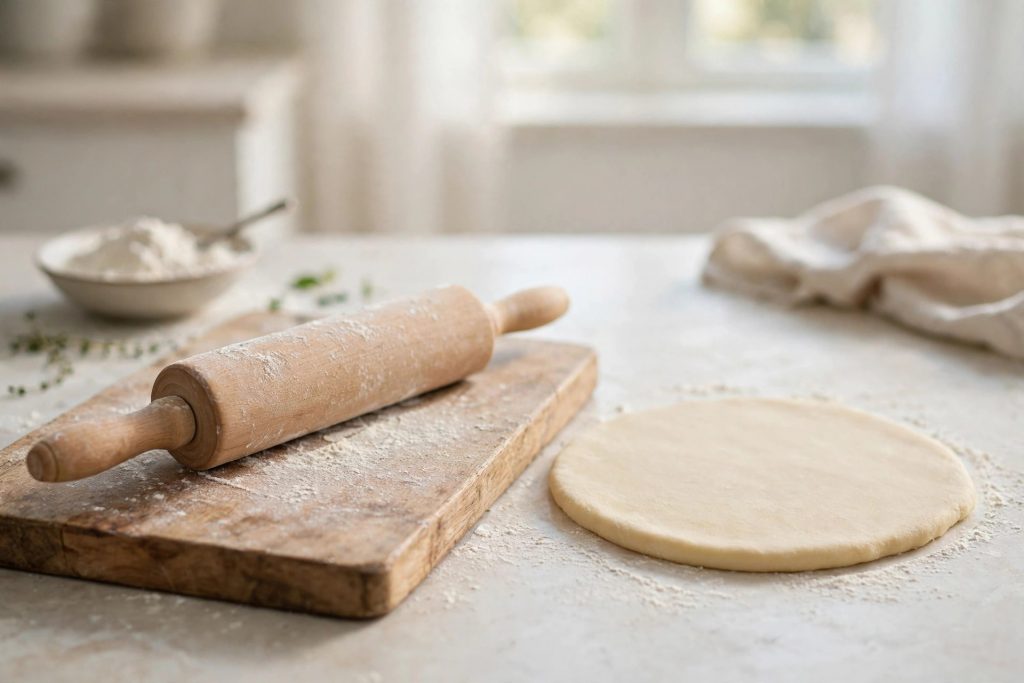
A rolling pin for even pastry dough turns a lumpy ball of dough into a smooth flat sheet, since dough rolled by hand or pressed with a bottle rarely comes out the same thickness all the way across. Whether you are making a pie crust, rolling pastry for tarts, or shaping dough for flatbreads, an even thickness matters, because thin spots brown too fast while thick spots stay pale and undercooked. A good pin spreads the dough in steady strokes, pressing it out from the centre toward the edges so the sheet stays level and the crust bakes evenly. This guide explains why even dough matters, how a rolling pin works, what to look for when you buy one, how to roll dough well, and how to keep your pin clean so it is ready every time you bake.
Why Even Dough Matters
Even dough bakes evenly, and that is the whole point of a rolling pin, since a crust that is thick in one place and thin in another cooks at two speeds at once. Thin spots turn dark and crisp before the rest of the pastry has set, while thick spots stay soft and pale and can leave the centre of a pie underdone. An even sheet also seals better, so a pie lid sits flat on the filling without gaps where steam escapes and the filling bubbles out. When the dough is the same thickness all the way across, the crust holds its shape in the oven, rising in a steady way instead of puffing up in one corner and sinking in another. Even dough matters for looks too, since a tart with a level edge and a smooth surface looks like it came from a bakery, while a wobbly crust gives the game away before anyone takes a bite. For cooks who bake often, the difference shows up in every pie, since a reliable rolling pin means fewer ruined crusts and more consistent results from the same recipe.
How a Rolling Pin Works
A rolling pin is a simple tool with one clear job, and its design makes that job easy. Most pins are a smooth cylinder with a handle at each end, and you push it across the dough with both hands, letting your body weight press the dough flat. The cylinder spreads the pressure evenly, so the dough thins out in a smooth sheet instead of tearing or bunching up under your fingers. Some pins have no handles and are shaped like a single long tube, which suits cooks who like to feel the dough through their palms and guide the pin with a light touch. Others have bearings in the handles, so the cylinder turns freely while your hands stay still, which helps when you roll a large sheet and need long steady strokes. The best pins are heavy enough to do some of the work for you, since weight presses the dough down without you having to lean hard on the handles. A good pin also turns smoothly, so it glides across the dough without catching or dragging. The tool needs no power and no moving parts beyond a simple turn, and its simplicity is the point, since fewer parts mean fewer things to go wrong on a busy morning in the kitchen.
Choosing the Right Rolling Pin for Your Kitchen
Choosing a rolling pin starts with the material, since it decides how the pin feels in your hands and how easy it is to clean. Wooden pins are the classic choice, with a warm grip and a surface that dough releases from easily once it is dusted with flour, while marble pins stay cool and suit pastry that must stay cold, and steel pins are heavy and smooth and wash well. Check that the pin is long enough for the sheets you roll, since a short pin forces you to roll a wide sheet in strips, while a long pin covers a pie crust in a few strokes. The weight should feel steady rather than tiring, since a pin that is too light makes you press hard, while one that is too heavy tires your wrists on a long bake. Handles should turn freely and sit comfortably in your hands, since a stiff handle drags the pin and leaves the dough uneven. If you roll pastry often, a pin with a smooth even surface and no grooves suits you, while a textured pin suits cooks who want a pattern pressed into biscuits or crackers. For cooks looking for everyday kitchen tools, Skyrocs offers a helpful starting point, and the pet supplies range covers daily items for homes that share their kitchen with a cat or a dog.
Rolling Dough Step by Step
Rolling dough well is mostly about patience and a light touch, since rushing the job is what tears dough and leaves it uneven. Start with dough that has rested in the fridge, since cold dough holds its shape and rolls out without sticking or tearing. Dust the bench and the pin lightly with flour, and set the dough in the centre of the bench. Place the pin across the middle of the dough and roll away from you with a steady stroke, then lift the pin, turn the dough a quarter turn, and roll again. Keep turning and rolling so the sheet grows evenly in every direction, and dust with a little more flour whenever the dough starts to stick. If the dough cracks at the edges, press the cracks together with your fingers and keep rolling, since a small tear is easy to mend while the dough is still soft. Check the thickness by lifting a corner and looking across the sheet, and stop when the sheet is even and the size you need. With a little practice, the routine takes a few minutes and becomes part of the rhythm of baking.
Cleaning and Storing Your Rolling Pin
A rolling pin earns its place when it is easy to clean, since dried dough sets hard and is stubborn to remove once it has dried on. Scrape off any dough with a blunt knife or a pastry scraper straight after use, before it has a chance to dry, and wipe the pin with a dry cloth. For a wooden pin, wipe it with a barely damp cloth and dry it at once, since soaking wood can swell the surface and crack the finish over time. Marble and steel pins wash well with warm soapy water and a soft cloth, and they dry quickly with a towel. Avoid harsh scourers on any pin, since scratches catch dough and leave marks on the next sheet you roll. Let the pin dry fully before putting it away, since a damp pin stored in a drawer can pick up smells and stains over time. Store it flat or hung on a hook where it is easy to reach, rather than buried under heavier pans that could dent a wooden pin or chip a marble one. A clean dry pin is ready the moment you need it, and keeping the routine simple means the tool gets used instead of sitting forgotten at the back of a drawer.
Frequently Asked Questions
Is a rolling pin for even pastry dough needed for baking?
Yes, baking with pastry needs dough at one even thickness, and a rolling pin gives you a smooth flat sheet every time, so crusts bake evenly and hold their shape instead of browning in thin spots and staying pale in thick ones.
How does a rolling pin for even pastry dough work?
You push the smooth cylinder across the dough with both hands, and the pin spreads the pressure evenly, pressing the dough out from the centre toward the edges into a level sheet without tearing or bunching it up.
Can a rolling pin for even pastry dough handle sticky dough?
Yes, sticky dough rolls well when it is cold and the bench and pin are dusted lightly with flour, so chill the dough first, dust as you roll, and lift the pin often to stop the dough clinging to the surface.
How do I clean a rolling pin for even pastry dough after use?
Scrape off any dough straight away, wipe a wooden pin with a barely damp cloth and dry it at once, wash marble or steel pins with warm soapy water, and let the pin dry fully before storing it flat or hung on a hook.
What should I look for when buying a rolling pin for even pastry dough?
Look for a smooth even surface, a length that covers the sheets you roll, a steady weight that does some of the work for you, handles that turn freely, and a material that washes easily, such as wood, marble, or steel.